9 Best Bread Maker Machines for Beginners (November 2026)
The best bread maker machines for beginners include the OSIPOTO 2LB Bread Maker (best overall for first loaves), the Neretva Bread Maker 20-in-1 2LB Bread Machine for the widest menu, and the KITCHENARM 29-in-1 Bread Machine for growing into custom recipes.
On this page (9 sections)
- The best bread maker machines for beginners
- How these beginner bread makers compare
- How we compared these bread makers for beginners
- What should a beginner look for in a bread maker machine?
- Which bread maker is easiest to use for a first loaf?
- How much counter space does a beginner bread maker need?
- Do beginner bread makers handle gluten free and whole wheat bread?
- What else should you know before buying a bread maker machine for beginners?
- Which beginner bread maker should you buy?
The best bread maker machine for beginners is the OSIPOTO 2LB Bread Maker, which covers the basics with 17 automatic programs and three loaf sizes. Choose the Neretva for the widest menu, the Cuisinart for convection crust, or the Briskind when counter space is tight.
A beginner machine should do three things well: knead and bake without your help, offer a menu you can read at a glance, and clean up fast. Every pick below covers all three, so the real choice is capacity, program count and counter footprint.
If your main goal is spending less, the bread maker under 200 dollars roundup narrows the field further. Our budget bread maker guide covers what you give up when the price drops.
Our picks at a glance
-
1

-
2
 Best for the widest menu
Neretva Bread Maker 20-in-1 2LB Bread Machine
9.5/10 our score
See it on Amazon -
3
 Best for growing into custom recipes
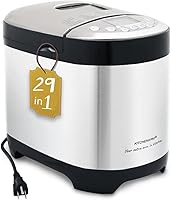
KITCHENARM 29-in-1 Bread Machine
8.4/10 our score
See it on Amazon
- 4
 Check it
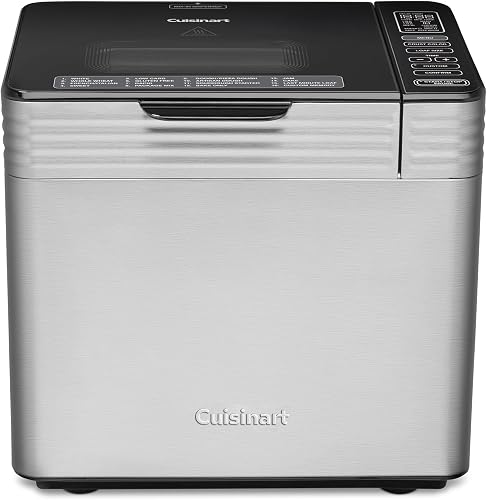
Cuisinart Convection 2 lb Bread Maker
Best for crust quality - 5
 Check it
SUMSATY 2.2LB & 16-in-1 Bread Maker Automatic
Best for larger families - 6
 Check it
KBS 20-in-1 2.2 lb Bread Maker
Best for saved custom settings - 7
 Check it
Amazon Basics 2 lb Bread Maker
Best for quick ExpressBake loaves - 8
 Check it
Briskind 1.5 lb Compact Bread Maker
Best for small kitchens - 9
 Check it
KITCHENARM 19-in-1 Bread Machine
Best for pre-packaged mixes
The best bread maker machines for beginners
The OSIPOTO is the top pick for most first-time bakers, and the rest of the list answers specific needs: a bigger pan, a longer menu, a convection crust or a smaller cabinet. Pick by the job your kitchen asks for.
OSIPOTO 2LB Bread Maker: Best overall for first loaves
- 17 automatic programs
- 3 loaf sizes and 3 crust settings
- 15-hour delay timer and 1-hour keep warm
- 600W motor
A beginner machine that covers basic, whole wheat, gluten free, jam and yogurt without a steep learning curve. The delay timer puts fresh bread on your morning schedule.
Pros
- 17 programs
- 15-hour delay timer
- Non-stick pan wipes clean
Cons
- Stainless steel body is heavier than compact picks
- Hand wash only
OSIPOTO is the one to buy first. Its 17 programs cover basic white, whole wheat, cake, jam, yogurt and gluten free bread, so the first loaf doesn't depend on guesswork.
Three loaf sizes run from 1 lb to 2 lb, and each has light, medium and dark crust settings. The 2 lb pan suits a family, while the 1 lb size keeps waste low for one or two people.
The 15-hour delay timer means you can load ingredients at night and wake to fresh bread. Keep warm holds the loaf for about an hour after the bake finishes.
A 600W motor spreads heat evenly around the pan.
Cleaning is a quick wipe of the non-stick pan. One trade-off: the pan is hand wash only and the stainless body is heavier than the compact picks here.
Buy it if you want a first machine that handles every loaf you'll try in month one. Move to the SUMSATY or KBS only if you regularly need loaves bigger than 2 lb.
Neretva Bread Maker 20-in-1 2LB Bread Machine: Best for the widest menu
- 20 automatic programs
- Dual heaters top and bottom
- Ceramic non-stick pan
- 15-hour delay timer
Twenty menus cover pizza dough, jam, yogurt and gluten free bread in one cabinet. The dual heaters bake from top and bottom for even browning.
Pros
- 20 programs including pizza dough
- Dual heaters for even baking
- Ceramic pan with no chemical coating
Cons
- Buttons lock during the cycle
- Interior pan is hand wash only
Neretva is the pick when you want the most programs in one cabinet. Twenty menus run from basic and French to pizza dough, jam, yogurt and dried meat floss, so a single machine covers bread and the dough you take to the oven.
Its dual heaters sit at the top and bottom of the pan and bake from both sides. Neretva says the 360-degree setup promotes even browning and the 550W power shortens a typical bake by more than an hour.
The pan is ceramic rather than standard non-stick, and Neretva says it's free of chemicals. It releases bread cleanly and wipes out without scrubbing.
A 15-hour delay timer and one hour of keep warm round out the beginner-friendly parts.
Two practical notes: the buttons lock once the cycle starts, so you hold the start button for three seconds to release them. The ceramic pan also needs hand washing.
Buy it for pizza dough and jam as much as sandwich loaves. The OSIPOTO still edges it on weight and simplicity for a pure beginner.
KITCHENARM 29-in-1 Bread Machine: Best for growing into custom recipes
- 29 automatic menus
- Four customizable memory slots
- 77 recipes in the book
- 15-hour delay timer
The 29 menus and four saved custom programs give a beginner room to grow. It also supports all-purpose flour as well as bread flour.
Pros
- 29 menus
- Four personalized menus
- Works with all-purpose flour
Cons
- More settings to learn than simpler machines
- Larger footprint than compact models
KITCHENARM's 29-in-1 suits the beginner who plans to experiment. Twenty-nine automatic menus include brioche, ciabatta, sourdough and gluten free, plus cake, jam and yogurt settings.
The part that matters later is the four custom memory slots. You can save a recipe's knead, rest, rise and bake times, then repeat it without relearning the settings.
The 77-recipe book and online recipe collection feed that habit.
It also accepts all-purpose flour as well as bread flour. That lowers the cost per loaf and widens the recipes you can try from a standard pantry.
The trade-off is complexity. Twenty-nine menus take longer to learn than the OSIPOTO's 17, and the machine is larger on the counter.
Its 2.5 in display helps, but this is a machine you grow into rather than one you master on day one.
Buy it if bread will become a regular hobby. For basic loaves only, a simpler pick serves you better.
Cuisinart Convection 2 lb Bread Maker: Best for crust quality
- Convection fan for crust color
- Automatic fruit and nut dispenser
- 16 programs
- 13-hour delay timer
A convection fan circulates air during baking for more even crust color. The mix-in dispenser drops fruit and nuts at the second knead without you watching the clock.
Pros
- Convection baking for crust
- Automatic mix-in dispenser
- Glass lid to watch the rise
Cons
- Higher wattage than the other picks here
- Only one custom memory slot
Cuisinart's convection model targets crust. A built-in fan moves air during baking so the crust colors more evenly across its light, medium and dark settings.
The automatic mix-in dispenser is the other beginner win. It holds up to three-quarters of a cup of fruit or nuts and releases them at the second knead, so raisin bread doesn't need you to stand by the machine.
Sixteen programs include sourdough starter, gluten free and low carb, and a custom memory slot saves one house recipe. The glass lid runs edge to edge so you can watch the rise without lifting it.
The delay timer runs 13 hours.
The 800W draw is the highest here and makes this the priciest pick for a beginner. The convection fan also rewards you only if crust texture is what you care about.
Otherwise the OSIPOTO costs less and bakes just as reliably.
Buy it for raisin bread and a crust you can show off. If you want the simplest start, skip the extra features and save the money.
Our convection bread maker guide covers the fan models in more detail.
SUMSATY 2.2LB & 16-in-1 Bread Maker Automatic: Best for larger families
- 2.2 lb capacity
- 16 programs
- 15-hour timer and 1-hour keep warm
- Non-stick pan
The 2.2 lb pan bakes loaves big enough for 6 or 7 people. Beginner-friendly controls keep the first batch simple.
Pros
- 2.2 lb capacity
- Three loaf sizes
- 15-hour delay timer
Cons
- Larger loaves need more counter room
- No convection fan
SUMSATY is the family pick. Its 2.2 lb pan bakes loaves the brand says serve 6 or 7 people, and three crust settings plus 1 lb, 1.5 lb and 2.2 lb loaf sizes let you scale down for smaller days.
Sixteen programs include basic, whole wheat, gluten free, French, jam and yogurt. The homemade setting takes your own recipe, and the controls keep to a simple add, select and start routine.
The 15-hour timer and one hour of keep warm match the top picks. A 600W motor with 360-degree heat spreads the bake evenly, and SUMSATY says noise stays under 50 dB so an overnight loaf won't wake the house.
The pan is non-stick and PTFE and PFOA free, and it wipes clean with a damp cloth. The trade-off against the OSIPOTO is fewer programs and no convection option.
For a big household, though, the extra capacity earns its counter space.
Buy it when one loaf needs to feed the whole table. A couple or a single baker gets more use from the 2 lb OSIPOTO.
KBS 20-in-1 2.2 lb Bread Maker: Best for saved custom settings
- 20 menus with a custom program
- 650W variable-frequency motor
- Ceramic non-stick pan
- 15-hour delay timer
A custom program saves your preferred timings so repeat bakes take one press. The ceramic pan releases bread without scrubbing.
Pros
- Custom mode saves settings
- Ceramic non-stick pan
- 60-minute keep warm
Cons
- Higher wattage than most picks here
- Heavier than the compact Briskind
KBS is built around repeat bakes. Its custom program saves your preferred timings, so the same loaf takes one press the next time.
That's the feature a beginner values most after the third or fourth bake.
Twenty menus include Polish bread, French, gluten free, dough and yogurt. The ceramic pan is fired at high heat and KBS says the non-stick surface holds up to repeated use.
A stainless steel paddle is easier to remove from baked bread than a coated one.
The 650W variable-frequency motor adjusts speed to the dough. KBS also pairs a dual temperature sensor with year-round temperature control, which matters if your kitchen swings between hot and cold through the year.
The 15-hour delay timer and 60-minute keep warm are standard here. So is a 15-minute power outage backup that resumes the program.
The trade-off is weight and wattage: this is one of the heaviest picks here, tying the OSIPOTO at 11.7 lb. Buy it if you'll bake the same loaf weekly and want to skip the settings.
Otherwise the OSIPOTO is lighter and simpler.
Amazon Basics 2 lb Bread Maker: Best for quick ExpressBake loaves
- 14 settings
- ExpressBake in under 90 minutes
- 3 crust colors
- LCD display
A simple programmable machine for basic loaves, dough and gluten free bakes. ExpressBake shortens the wait when you want bread today.
Pros
- ExpressBake in under 90 minutes
- 14 settings
- LCD display
Cons
- Fewer menus than the top picks
- No fruit and nut dispenser
Amazon Basics is the straightforward pick. Fourteen settings cover breads, doughs, gluten free options and jams, with three crust colors and an LCD display.
The ExpressBake setting is the reason to choose it: Amazon Basics says bread finishes in under 90 minutes. That's useful when you want a loaf for dinner and didn't plan ahead.
The 550W motor handles a 2 lb loaf, matching the top picks on capacity. Controls stay simple, so the first bake is a short read of the manual.
It offers fewer menus than the OSIPOTO and has no fruit and nut dispenser. The gap shows up when you move past basic white and whole wheat.
For a beginner who mostly wants sandwich bread fast, though, this does the job without extra features to learn.
Buy it for the ExpressBake shortcut and a low learning curve. Add a machine with more programs only if you plan to bake beyond basic loaves.
Briskind 1.5 lb Compact Bread Maker: Best for small kitchens
- 1.5 lb capacity
- 19 programs
- Carrying handle
- 15-hour delay timer
A compact cabinet with a carrying handle for kitchens short on counter space. The 1.5 lb pan suits two or three people.
Pros
- Compact size with carrying handle
- 19 programs
- 1-hour keep warm
Cons
- Smallest loaf size here
- No convection fan
Briskind solves the counter-space problem. The 1.5 lb pan and compact body fit where a 2 lb machine won't, and the carrying handle lets you move it off the counter between bakes.
Nineteen programs cover basic white, rapid, French, whole wheat, gluten free, sourdough starter, jam, yogurt and dough. Separate knead only, rise only and bake only settings let you control each stage by hand when you follow your own recipe.
The 1.5 lb pan fills more evenly than a 2 lb pan, so loaves come out well shaped rather than squat. Briskind says the smaller cabinet is lighter and more efficient to run.
A 15-hour delay timer, one hour of keep warm and a 15-minute power failure backup are all included. So is an audible reminder to add fruit and nuts.
The trade-off is loaf size. It serves two or three people, not a family of six.
Buy it for a small kitchen and a small household. If you need 2 lb loaves, the Amazon Basics costs less for more capacity.
KITCHENARM 19-in-1 Bread Machine: Best for pre-packaged mixes
- 19 menus
- Supports most pre-packaged bread mixes
- 15-hour delay timer
- 1-press operation
Designed for the shortest route to a loaf, including pre-packaged mixes. Settings are saved so a repeat recipe takes one press.
Pros
- Works with pre-packaged bread mixes
- 19 menus
- Saves your last settings
Cons
- White plastic body shows marks
- Fewer menus than the KITCHENARM 29-in-1
KITCHENARM's 19-in-1 is the instant-bread pick. It supports most pre-packaged bread mixes, so you skip measuring flour, sugar and yeast for your first loaves.
Nineteen menus cover 11 bread types, from basic white and whole wheat to gluten free and sourdough, plus seven non-bread settings like cake, jam and yogurt. The homemade menu lets you program each stage.
Settings are saved between bakes. Use the same recipe twice and the second loaf takes one press of start.
A 15-hour delay timer and a 2 lb capacity match the bigger machines here.
It also accepts all-purpose flour in its recipes, and the 57-recipe book gives you plenty to try. The white plastic body shows marks more than stainless models.
Against the KITCHENARM 29-in-1, this one has fewer menus and no four-slot custom memory. Buy it if pre-packaged mixes will be your shortcut into baking.
Choose the 29-in-1 once you want full control over cycle times.
How these beginner bread makers compare
The comparison below puts the specs side by side so you can match capacity, programs and timer length to your kitchen. Use it after you've picked two or three machines to weigh against each other.
| Product | Best for | Capacity | Programs | Watts | Our score |
|---|---|---|---|---|---|
| OSIPOTO 2LB Bread Maker | overall for first loaves | 2 lb | 17 | 600 | 9.7 |
| Neretva Bread Maker 20-in-1 2LB Bread Machine | the widest menu | 2 lb | 20 | 565 | 9.5 |
| KITCHENARM 29-in-1 Bread Machine | growing into custom recipes | 2 lb | 29 | 550 | 8.4 |
| Cuisinart Convection 2 lb Bread Maker | crust quality | 2 lb | 16 | 800 | 8.2 |
| SUMSATY 2.2LB & 16-in-1 Bread Maker Automatic | larger families | 2.2 lb | 16 | 600 | 8.0 |
| KBS 20-in-1 2.2 lb Bread Maker | saved custom settings | 2.2 lb | 20 | 650 | 7.8 |
| Amazon Basics 2 lb Bread Maker | quick ExpressBake loaves | 2 lb | 14 | 550 | 7.6 |
| Briskind 1.5 lb Compact Bread Maker | small kitchens | 1.5 lb | 19 | 500 | 7.5 |
| KITCHENARM 19-in-1 Bread Machine | pre-packaged mixes | 2 lb | 19 | 550 | 7.4 |
How we compared these bread makers for beginners
We ranked these machines by the specs that decide a beginner's first month: program count, loaf sizes, crust settings, delay timer, keep warm, pan material and how hard the controls are to read.
We also weighed the weight and footprint of each cabinet, because a bread maker that's awkward to move or store rarely gets used. The score weighs specs, features and fit with what a beginner actually needs against the machines here.
What should a beginner look for in a bread maker machine?
Buy for the menu you'll use first and the loaf size your household eats. A beginner machine needs an easy basic program, a clear display and a pan that wipes clean.
Start with at least 12 programs so basic white, whole wheat and gluten free are covered. Three crust settings and a delay timer matter more than an exotic menu you won't try in month one.
Pan material decides cleanup. A ceramic or quality non-stick pan releases bread with less scrubbing, though most here are hand wash only.
Check the weight too: a 12 lb machine is fine on a fixed counter but tiring to lift into a cupboard.
Is 2 lb too big for a beginner?
No. A 2 lb pan usually offers smaller loaf sizes too, so you can bake 1 lb or 1.5 lb from the same machine.
The OSIPOTO, Neretva, KITCHENARM and Amazon Basics all let you size down.
Should I start with a simple or a feature-heavy machine?
Start simple. Fewer programs mean fewer settings to misread on the first bake.
Move to a 20 or 29-menu machine like the KITCHENARM once basic loaves come out well.
Which bread maker is easiest to use for a first loaf?
The OSIPOTO is the easiest of this group for a first loaf. Add the ingredients, pick a menu and press start, and the machine handles kneading, rising and baking from there.
Its 17 programs keep the choices short and its display shows the bake time. The clear time guidance helps set expectations: a 1 lb loaf takes about 3 hours 35 minutes in the basic program, a 2 lb loaf about 3 hours 45 minutes.
Neretva and SUMSATY run the same add, select and start routine. KITCHENARM's 19-in-1 adds saved settings and pre-packaged mix support if you want the machine to remember your loaf.
Do I need to stand by the machine while it bakes?
No. All these machines run the full cycle on their own.
The delay timer lets you load ingredients hours ahead. The only times you need to step in are adding mix-ins when the machine beeps and removing the loaf at the end.
How much counter space does a beginner bread maker need?
Plan for about a foot of width and depth per machine. Most 2 lb bread makers here measure roughly 11 to 14 in deep and 9 to 11 in wide, so they need more room than a toaster.
The Briskind is the space-saver at 1.5 lb capacity and one of the lightest cabinets here. It also has a carrying handle so it can live in a cupboard between bakes.
The OSIPOTO and KBS are heavier, so a fixed counter spot suits them better.
Leave clearance behind and above the machine for ventilation. OSIPOTO notes that good airflow matters for best results and that the machine pauses if it overheats.
After a long bake, let it cool for about 20 to 30 minutes before the next loaf.
Can I put a bread maker under a wall cabinet?
Only if there's clearance for the lid to open fully and for air to move. Measure the open lid height before you commit to a spot.
A compact model like the Briskind gives you more headroom in tight kitchens.
Do beginner bread makers handle gluten free and whole wheat bread?
Yes. Every machine here except the ExpressBake shortcut covers whole wheat, and most include a gluten free program.
That matters because those doughs behave differently from basic white.
Gluten free dough lacks the stretch of wheat flour and needs its own cycle. The OSIPOTO, Neretva, Cuisinart, SUMSATY, Amazon Basics and both KITCHENARM models all list a gluten free setting.
KBS covers it in its 20 menus too.
Whole wheat benefits from a longer rest before baking. A machine with a dedicated whole wheat program, like the OSIPOTO or Briskind, handles that timing for you.
All-purpose flour also works in the KITCHENARM machines if you don't keep bread flour on hand.
Is a bread maker good for sourdough?
Only partly. Several machines here include a sourdough starter program, including the Cuisinart and Briskind.
That prepares the starter rather than baking a full sourdough loaf from scratch.
What else should you know before buying a bread maker machine for beginners?
The machine only does part of the work. Weigh your flour and use the recipe's yeast amount, because small measurement errors change the rise more than any setting.
Buy a kitchen scale before the first bake. Cup measures vary enough to make a loaf dense or collapsed.
Also keep bread flour on hand for basic recipes unless your machine, like the KITCHENARM pair, supports all-purpose flour.
Pan care matters too. Most pans here are hand wash only, and a dishwasher can wear the non-stick or ceramic coating.
Wipe or wash by hand and dry fully before storing.
Finally, expect the machine to be audible but not loud. Neretva puts noise under 40 dB and OSIPOTO around 50 dB.
A closed kitchen door is enough to keep it out of a bedroom.
Can I use a bread mix instead of flour?
Yes. The KITCHENARM 19-in-1 supports most pre-packaged bread mixes, so you skip measuring the dry ingredients.
Follow the mix's instructions for water and yeast, then choose the matching basic program.
Which beginner bread maker should you buy?
Buy the OSIPOTO 2LB Bread Maker if you want one machine that covers basic, whole wheat and gluten free loaves with a timer that puts bread on your schedule. It's the best bread maker machine for beginners who want a straight path to a good first loaf.
Pick the Neretva if pizza dough and jam matter as much as sandwich bread. Choose the Cuisinart for a convection crust and an automatic mix-in dispenser.
The Briskind fits a small kitchen, the SUMSATY feeds a big family, and the KITCHENARM 29-in-1 grows with you if bread becomes a hobby.
For pizza nights in particular, see our roundup of the bread machine for pizza dough options.
Our top 3 picks at a glance
-
1
-
2
Best for the widest menu
Neretva Bread Maker 20-in-1 2LB Bread Machine
9.5/10 our score
See it on Amazon -
3
Best for growing into custom recipes
KITCHENARM 29-in-1 Bread Machine
8.4/10 our score
See it on Amazon
Frequently asked questions
How long does a beginner bread machine take to bake a loaf?
Basic program times vary with loaf size. OSIPOTO lists about 3 hours 35 minutes for a 1 lb loaf and about 3 hours 45 minutes for a 2 lb loaf in its basic program.
Quick programs like ExpressBake finish in under 90 minutes.
Do I need bread flour for a first loaf?
Most recipes call for bread flour because its higher gluten gives a better rise. KITCHENARM supports all-purpose flour in its recipes too, so you can start with what's in the pantry.
Follow the recipe's flour type for the first bake.
Can a bread machine knead dough for pizza?
Yes. Several machines here include a dedicated pizza dough program.
The Neretva and KITCHENARM list a pizza dough menu, and the Briskind has a dough setting.
You shape and bake the crust in your own oven.
Is a bread machine loud enough to hear from another room?
Noise levels are low in this group. OSIPOTO says its machine runs at about 50 dB and Neretva puts motor noise under 40 dB.
Both are roughly the sound of a quiet conversation, so a closed kitchen door muffles it.
What should I clean first on a new bread machine?
Wash the bread pan and kneading paddle by hand before the first loaf. Most pans here are hand wash only.
Wipe the outside with a damp cloth and let everything dry fully before you add ingredients.