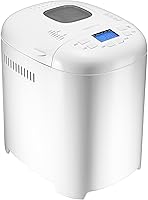
1 lb, 1.5 lb or 2 lb Bread Machine Loaf Size
Choose a 1 lb loaf for light use, 1.5 lb for a small household, and 2 lb for frequent baking or leftovers. The right bread machine loaf size depends on how quickly you eat bread, the machine’s available settings and your counter space.
On this page (11 sections)
- What bread machine loaf size should you choose?
- Is a 1 lb bread machine loaf enough for one or two people?
- When is a 1.5 lb bread machine loaf a better fit?
- Who should buy a 2 lb bread machine?
- When does a 3 lb bread machine loaf size make sense?
- How should you compare loaf capacity with counter space?
- How do you set up and use a bread machine loaf size?
- What mistakes can lead to the wrong loaf size?
- How does loaf size affect freshness and leftovers?
- How should you make the final choice?
- Which bread machine loaf size should you choose?
The best bread machine loaf size is the smallest one that fits your usual bread routine. A 1 lb loaf suits lighter use, 1.5 lb can work well for a small household, and 2 lb or larger is useful when you bake often or need more bread per batch.
Capacity describes the machine’s intended loaf size, but it doesn’t tell you how many days that loaf will last. Your slice habits, recipe, storage plan and machine footprint all matter.
For more capacity options, see our guide to large bread machines.
What bread machine loaf size should you choose?
Choose by how much bread you use between bakes, then check which sizes the machine can actually make. As a starting point, consider 1 lb for light use, 1.5 lb for regular use by a small household, and 2 lb or more for larger batches.
| Loaf size | A useful starting point | Consider a different size if |
|---|---|---|
| 1 lb | One or two people, or occasional bread | Several people use bread every day |
| 1.5 lb | A couple or small household with regular bread use | You want fewer baking sessions or more leftovers |
| 2 lb | Frequent bread use or sharing loaves | You may leave part of the loaf unused |
| 3 lb or more | Larger batches, gatherings or a steady bread habit | You have limited counter space or little demand |
These are guides, not serving guarantees. Slice thickness and whether you use bread for toast, sandwiches or meals can change how quickly a loaf disappears.
Think through a normal week rather than planning around an occasional gathering. If a large batch would be useful only once in a while, a machine with multiple loaf settings can help you make less on ordinary days.
Is a 1 lb bread machine loaf enough for one or two people?
A 1 lb loaf can be enough for one or two people who eat bread occasionally or use it for a few meals. It’s also a sensible choice if you prefer smaller, fresh batches and don’t want to store much leftover bread.
The Zojirushi Home Bakery Mini makes 1 lb loaves and has settings for cookie or pasta dough, jam, cake and quick baking. Its dimensions are 8.5 in wide, 11.25 in deep and 12.25 in high, making it a compact option for a kitchen with limited counter space.
Choose the Mini if a 1 lb loaf matches your routine and you want a narrower machine. Skip it if you regularly need larger batches; its listed capacity is 1 lb, so it doesn’t offer the flexibility of a machine with several loaf-size settings.
A smaller loaf doesn’t mean every bake takes proportionally less time. Check the machine’s recipe book and cycle choices, then plan around the full cycle.
Our bread machine white bread guide explains the steps behind a basic loaf.
When is a 1.5 lb bread machine loaf a better fit?
A 1.5 lb loaf can bridge the gap between small batches and a full 2 lb loaf. Consider it when 1 lb feels too limited but your household doesn’t need a large batch at every bake.
The Briskind 1.5 lb Compact Bread Maker has 1 lb and 1.5 lb settings, so you can scale the batch to your plans. It also offers programs for several bread types, dough, jam and yogurt, plus separate knead-only, rise-only and bake-only settings for manual control.
The Briskind is a good fit if you want a compact machine with two loaf sizes and a range of programs. Skip it if you need a 2 lb or larger batch, or if you live in a 230-volt region such as the UK or EU; the machine is designed for 120 volts.
The maker describes the 1.5 lb capacity as suitable for a family of 2 or 3. Use that as a rough guide.
Then base your choice on how much bread you personally use. If you’re new to baking, follow a recipe scaled to the selected loaf size and our first-loaf walkthrough.
Who should buy a 2 lb bread machine?
A 2 lb machine suits households that use bread often or want a larger batch to share. A model with smaller settings can also serve lighter-use days without making you bake at full capacity.
The Cuisinart 12-Program 2 lb Bread Maker has settings for 1 lb, 1.5 lb and 2 lb loaves. It also lets you choose among three crust colors and has an LCD display that shows the cycle, selected options and countdown time.
Choose the Cuisinart if you want one machine to cover different batch sizes. Skip it if you’re sure a 1 lb loaf is all you need and prefer a machine designed specifically for small batches.
Use the recipe amount that matches the selected size. A 2 lb setting isn’t a reason to increase the ingredients in a 1 lb recipe without adjusting the other amounts.
For another angle on machine features, see our bread machine buying guide.
When does a 3 lb bread machine loaf size make sense?
A capacity of 3 lb or more makes sense when you have a steady need for larger batches. It can serve a household that shares bread often, but it may be more machine and more bread than a smaller household needs.
The Neretva 3.3 lb 15-in-1 has selectable capacities of 2.2 lb, 2.76 lb and 3.3 lb. It also has 15 programs, including bread, dough, jam and yogurt options, and a fruit-and-nut dispenser that adds those ingredients automatically.
Choose it if you’ll use its larger settings regularly and have room for a 15.4 in deep, 11 in wide machine. Skip it if you mostly need a few slices at a time or don’t want to store a larger appliance.
The brand describes the largest loaf as serving up to 7 or 8 people. Actual servings depend on appetite and slice size, so estimate your household’s use before you choose the maximum capacity.
How should you compare loaf capacity with counter space?
Capacity tells you how much bread a machine is designed to make, while its outside dimensions tell you whether it fits your kitchen. Check both before buying, especially if the machine will sit beneath cabinets or move between the counter and a cupboard.
Measure the spot where you plan to use the machine, then account for the lid opening and removing the pan. Also check where you’ll store it if it won’t live on the counter.
A larger loaf capacity does not guarantee a larger footprint, so use the machine’s dimensions rather than guessing from capacity alone.
For a comparison, the Cuisinart measures 10.25 in deep, 13.25 in wide and 11.25 in high. The Briskind measures 12 in deep, 9 in wide and 10.5 in high.
These measurements give you a concrete starting point for checking the available space.
How do you set up and use a bread machine loaf size?
Set up the machine on a stable, level surface with room to open the lid and lift out the pan. Before the first bake, read the instruction booklet so you know how to fit the pan and paddle, choose a cycle and clean the parts.
Use a recipe written for the capacity you selected. Add ingredients in the order specified by that machine’s recipe, since ingredient order can vary.
Measure carefully, particularly for flour, liquid and yeast, and keep yeast from direct contact with liquid until mixing begins when the recipe calls for that arrangement.
Select the cycle, loaf size and crust color where those options are available. Machines don’t offer the same controls on every cycle, so check the instructions before assuming a size or crust setting applies.
If the machine has a delay timer, use only ingredients that are suitable for sitting before the cycle begins. Don’t use a delayed start with perishable ingredients unless the machine’s instructions specifically allow it.
For more cycle details, see bread machine settings explained.
What mistakes can lead to the wrong loaf size?
The most common size mistake is choosing a machine by its maximum capacity without checking its smaller settings. If you want one appliance for both small and large batches, confirm that it offers the loaf sizes you expect and has recipes for them.
Another mistake is scaling ingredients by guesswork. A loaf that is too large for the recipe or pan can rise and bake poorly; too little dough may not suit the cycle.
Match the recipe to the selected size, and make changes only when the machine’s instructions give you a reliable method.
Don’t assume a larger loaf always saves time. It may reduce how often you bake, but a longer cycle or excess bread can offset that convenience.
Check the cycle information and think about how quickly you’ll eat or store the loaf.
Finally, don’t buy for a rare gathering if everyday use points to a smaller capacity. Freezing slices can help manage leftovers, but it adds a storage step.
Choose a larger size when you expect to use that extra bread as part of your normal routine.
How does loaf size affect freshness and leftovers?
A loaf that matches your household’s use can make it easier to eat the bread while it’s fresh or store it before it goes stale. Consider how many slices you use over a few days instead of deciding by household size alone.
If bread is part of breakfast and lunch most days, a 1.5 lb or 2 lb loaf may be practical. If you bake for occasional toast or a weekend meal, a 1 lb loaf may leave less to manage.
You can freeze slices you won’t use soon, but decide whether that fits your habits. If you rarely freeze food, buying a larger machine to cover occasional extra demand may create more leftovers than convenience.
How should you make the final choice?
Choose the capacity that fits your usual week: 1 lb for lighter use, 1.5 lb for a flexible middle size, and 2 lb or more when you regularly use larger batches. If your needs vary, prioritize machines with multiple selectable sizes.
Check the machine’s footprint and recipe options before deciding. For a small batch, consider the Zojirushi Mini; for 1 lb or 1.5 lb flexibility, consider the Briskind.
For several settings up to 2 lb, consider the Cuisinart. Choose the Neretva if its larger capacities match your regular demand and available space.
Which bread machine loaf size should you choose?
The right bread machine loaf size is the one you’ll use without routinely running short or ending up with extra bread. Start with 1 lb for occasional baking, choose 1.5 lb for regular small-household use, and move to 2 lb or more when you know your household will finish the batch.
If you’re still comparing models, see our bread maker reviews for more options.
Frequently asked questions
What bread machine loaf size is best for two people?
A 1 lb or 1.5 lb loaf can suit two people, depending on how often you eat bread and whether you want leftovers. If bread is a daily staple, compare both sizes.
If you bake occasionally, a smaller loaf can mean less bread to use up or store.
Is a 1 lb bread machine too small for a family?
A 1 lb loaf may feel small if several people eat bread daily or you want enough for sandwiches and toast. A 1.5 lb or 2 lb option makes more per bake, but choose based on how quickly your household will finish it.
Can a 2 lb bread machine make smaller loaves?
Some machines offer several loaf sizes, while others are designed around one capacity. Check the machine’s selectable sizes and recipes before assuming a larger machine can bake a good smaller loaf.
The Cuisinart in this guide offers 1 lb, 1.5 lb and 2 lb settings.
Does a larger bread machine loaf need more counter space?
Capacity and footprint are separate measurements, so a larger loaf does not tell you exactly how much counter space the machine needs. Check its outside dimensions, then leave room to open the lid, remove the pan and reach the controls.
What does a 3 lb bread machine loaf size mean?
A machine described as 3 lb or larger is meant for bigger batches, but check its actual selectable sizes. The Neretva here has 2.2 lb, 2.76 lb and 3.3 lb options.
Consider those amounts against your household’s bread use and storage space.