Breville Custom Loaf Bread Maker Review: Worth It? (November 2026)
The Breville Custom Loaf BBM800XL is worth buying if you want to build and store your own bread recipes. It is the pick here for bakers who treat the machine as a small bakery, but the Cuisinart is the better first machine for most households.
On this page (8 sections)
The Breville Custom Loaf BBM800XL is the bread machine to buy if you want to program your own recipes, not just press a preset. It stores up to nine custom settings and offers 13 automatic programs, so it covers both everyday loaves and experiments.
The trade-offs are its 830 watt draw, its 1 year limited warranty and its 16.8 lb weight on the counter. For most households, the Cuisinart 12-Program below is the easier first machine.
Pick the Breville when the custom settings are the reason you are buying.
The Breville Custom Loaf at a glance
The BBM800XL is a high-capacity, programmable bread maker in brushed stainless steel. It bakes loaves from 1 lb to 2 1/2 lb and gives you nine custom settings to store your own recipes.
Three crust colors let you nudge browning without rewriting a recipe.
Breville Custom Loaf BBM800XL: Best for custom recipes
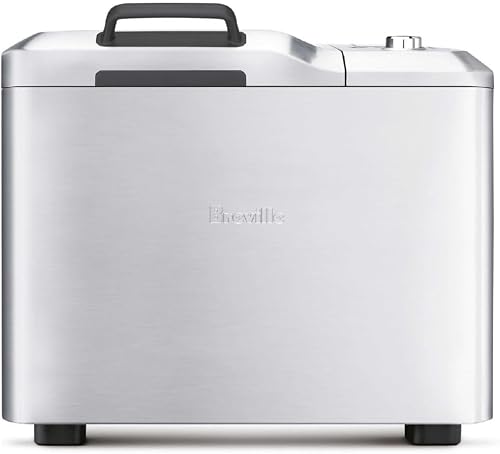
- Nine custom settings
- 13 automatic programs
- Collapsible kneading paddle
- Automatic fruit and nut dispenser
- 830 watts
A programmable bread machine for bakers who want to save their own recipes and control crust, mix-ins and loaf size. The collapsible paddle cuts the hole in the bottom of each loaf.
Pros
- Nine custom settings store personal recipes
- Collapsible paddle leaves a smaller hole in the loaf
- Automatic fruit and nut dispenser adds mix-ins at the right time
- 60 minutes of backup power for short outages
- Gluten free and yeast free programs
Cons
- Rated 830 watts, so it draws more than many machines
- Only a 1 year limited warranty
- Heavier at 16.8 lb than compact rivals
The smart LCD screen walks you from dough to warm bread and shows the current stage. That matters more than it sounds: when a loaf is rising for an hour, a display that tells you where you are beats guessing.
The screen also shows the crust and loaf size you picked, so you can check your choices without opening the lid.
The 830 watt motor is the strongest of the machines compared here. That power matters most on dense doughs like whole wheat and rye, where a weaker machine can stall or leave flour unmixed.
It also means the Breville runs a bake cycle that holds temperature well, which helps the crust color setting do what you asked rather than brown unevenly.
What the Custom Loaf name actually means
Most bread machines run preset programs and leave it there. The Custom Loaf adds a layer on top: nine settings where you save your own recipe, your own timings and your own crust preference.
The 13 automatic programs cover gluten free, yeast free, crusty loaf, dough and pasta, and jam, so you can start from a preset and still store your tweaks. If you keep adjusting a rye or a seeded loaf until it comes out right, this is the feature you are paying for.
If you bake the same white loaf every week, the presets already cover you.
Who the Breville Custom Loaf suits
Buy it if you bake more than one style of bread and want the machine to remember your recipes. A baker who moves between gluten free, crusty loaf and a jam batch in the same month gets real use from the program list.
The yeast free program is a quiet advantage too: it lets you bake a loaf without commercial yeast, which is hard to find on basic machines. The automatic fruit and nut dispenser also earns its place if you bake raisin or walnut loaves regularly.
The collapsible paddle leaves a smaller hole in the bottom of each loaf, which matters when you slice for sandwiches.
Skip it if you want a small, light machine for simple white and whole wheat loaves. The Cuisinart below does that with fewer watts and a longer warranty.
The Breville is also a big footprint at 16.4 in wide and 16.8 lb, so measure the counter before you commit. A baker who only makes one loaf a week will pay for custom settings they never use.
The specs that matter in daily use
The numbers that change your day are loaf size, crust control, the paddle and the dispenser, not the wattage on the box. The BBM800XL covers 1 lb to 2 1/2 lb loaves and offers three crust colors.
The 830 watt rating is the highest here and helps a dense loaf bake through, but it also means the machine pulls more current than the compact Cuisinart.
| Spec | Breville Custom Loaf BBM800XL |
|---|---|
| Programs | 13 automatic |
| Custom settings | 9 |
| Loaf sizes | 1 to 2 1/2 lb |
| Crust colors | 3 |
| Dispenser | Automatic fruit and nut |
| Paddle | Collapsible |
| Backup power | 60 minutes |
| Power | 830 watts |
| Warranty | 1 year limited |
The 2 1/2 lb top end is generous. It bakes a loaf big enough for a family week, and the smaller sizes keep a two-person household from wasting bread.
The catch is that the machine is large and heavy, so it stays out on the counter rather than going in a cupboard. At 13.3 in tall, give it headroom as well as counter width.
The 60 minutes of backup power covers short outages. If the power cuts mid-cycle, the Breville resumes instead of starting over.
For long outages it cannot save the loaf, so plan around storms rather than relying on it. Keep in mind the backup is a window, not a guarantee: a two hour outage in the middle of a rise will still cost you the batch.
Setting up the Breville Custom Loaf
Set the machine on a dry, level counter with room for the lid to open fully before your first bake. The 16.4 in width and 16.8 lb weight mean you want a spot you won't move it from.
Wipe the pan and paddle with a soft cloth, then wash them by hand as the care instructions say. The pan and paddle are hand wash only, so don't put them in the dishwasher.
Run the pan and paddle through a first cycle to clear any manufacturing film before you bake bread you plan to eat. Then load ingredients in the order the recipe gives: liquid first for most machines, then flour, then yeast in a well away from the salt.
Breville's manual and recipes walk you through the order for each program.
Pick your program, crust color and loaf size on the LCD, then press start. The display shows the cycle and the countdown.
For the fruit and nut dispenser, fill it before you start so the machine can drop the mix-ins at the right time. Leave the dispenser lid closed after filling so steam does not clump the fruit before the drop.
When you save a custom recipe, set the cycle times once and the machine keeps them. On the next bake you load the ingredients, choose that saved setting and press start.
That is the whole routine, and it is where the Breville pulls ahead of machines that only offer presets.
Care and cleaning after each loaf
Hand wash the pan and both paddles, then dry them fully before the next bake. The pan's nonstick coating is the part that ages first, so skip abrasive sponges and sharp tools when you clean out baked-on crust.
Warm water and a soft cloth handle most of it. Let the pan soak briefly if a crust sticks, but don't leave it in water long.
The collapsible paddle has a hinge, so rinse it well and let it dry open rather than folded. The fixed paddle is for jam only, so keep it separate from the bread paddle to avoid confusion.
Wipe the interior of the machine and the lid seal with a damp cloth. Crumbs around the seal stop the lid closing evenly.
Wipe the outside with a damp cloth and dry it. The stainless steel finish shows fingerprints, so a quick wipe after each bake keeps it looking clean.
Unplug the machine before you clean it and let it cool first. Empty the fruit and nut dispenser after a bake so sticky raisins or nuts do not set inside it.
For more on keeping any bread machine in shape, the bread machine care guide covers the parts that wear first.
Trade-offs of the Breville Custom Loaf
The honest trade-offs are wattage, warranty length and counter space. The BBM800XL is rated 830 watts, which is more than the Cuisinart at 550 watts and the KITCHENARM at 550 watts.
A denser loaf benefits, but the machine uses more electricity per cycle and needs a solid outlet nearby. Don't run it on the same circuit as a kettle or toaster if you can help it.
The warranty is 1 year limited, while the Cuisinart carries a limited 3 year warranty and the KITCHENARM a 2 year warranty. On a machine in this price tier, the shorter coverage is a real difference to weigh.
The pan coating and the paddle hinge are the parts most likely to wear, and those are exactly the parts you want covered longer.
It is also the heaviest and widest of the three. At 16.8 lb and 16.4 in wide, it needs a permanent counter spot.
If your kitchen is tight, the Cuisinart's compact footprint at 13.25 in wide and 11.25 in tall is easier to live with. Moving the Breville in and out of a cupboard each bake is not realistic for most people.
The custom settings are the reason to accept those trade-offs. Without them, a cheaper machine covers the same basic loaves.
Weigh how often you will actually write and save a recipe before you pay for that ability.
Alternatives worth comparing
The Breville is not the only sensible choice. Two machines below cover the buyer who wants more programs for less, or more recipes for a beginner.
For a closer head-to-head with a rival brand, the Breville vs Zojirushi bread maker comparison weighs the two directly.
Cuisinart 12-Program 2 lb Bread Maker
The Cuisinart is the easier first machine for most households. It offers 12 menu programs, three crust colors and three loaf sizes from 1 lb to 2 lb.
A 13 hour delay start means fresh bread in the morning, and a 60 minute keep warm cycle holds it until you are ready. The limited 3 year warranty is the longest of the three.
It mixes and bakes cakes, pizza dough and other baked goods as well as bread. The compact vertical pan design at 13.25 in wide and 11.25 in tall fits tighter counters than the Breville.
Read the full Hamilton Beach bread maker review if you are also weighing a budget brand against the Cuisinart.
KITCHENARM 29-in-1 Bread Machine
The KITCHENARM is the program-heavy pick for beginners who want guidance. It has 29 automatic menus, including 21 bread menus, and a recipe book with 77 recipes.
Four personalized menus let you set cycle times yourself, close to what the Breville's custom settings offer. A 15 hour delay timer and 1 hour keep warm cycle round it out.
Its 550 watts match the Cuisinart and sit below the Breville. The 2 year warranty also beats the Breville's 1 year.
The 2.5 in LCD is smaller than the Breville's screen, but the menu count means you rarely need to program a cycle from scratch. The KBS vs Neretva bread maker comparison and the Neretva 20-in-1 bread maker reviews cover two more machines if you are still deciding.
Verdict: buy the Breville Custom Loaf or skip it?
Buy the Breville Custom Loaf if your own recipes are the point. The nine custom settings, the automatic fruit and nut dispenser and the collapsible paddle are features the cheaper machines here don't match.
It suits a baker who moves between gluten free, crusty and seeded loaves and wants the machine to remember each one.
Skip it if you bake simple white or whole wheat loaves and want the longest warranty for the least counter space. The Cuisinart 12-Program covers daily bread with a 3 year warranty and a compact footprint.
The KITCHENARM 29-in-1 is the middle ground for anyone who wants many presets and four customizable menus. Our score weighs specs, features and buyer feedback against what you're shopping for.
This Breville Custom Loaf bread maker review lands at 8.3, just below the Cuisinart, because the custom features are excellent but the shorter warranty and higher wattage count against it for most buyers.
Frequently asked questions
Is the Breville Custom Loaf bread maker worth it?
It is worth it if you plan to write and repeat your own bread recipes. The nine custom settings let you store them, and the collapsible paddle leaves a smaller hole in the base.
For simple daily loaves on a budget, a cheaper machine does the same basic job.
How big are the loaves the Breville Custom Loaf makes?
It bakes loaves from 1 lb to 2 1/2 lb. You pick the size in the settings, and the larger size feeds a bigger household while the smaller size suits one or two people who want fresh bread more often.
What programs does the Breville Custom Loaf have?
The BBM800XL has 13 automatic programs, including gluten free, yeast free, crusty loaf, dough and pasta, and jam. On top of those it has nine custom settings where you save your own recipes.
Does the Breville Custom Loaf knead and bake in one pan?
Yes. The collapsible kneading paddle mixes and kneads the dough in the pan, then folds in before the bake starts so it leaves less of a gap in the finished loaf.
A fixed paddle is also included, for jam only.
Does the Breville Custom Loaf have a fruit and nut dispenser?
Yes. The automatic dispenser holds fruit, nuts and other mix-ins and drops them in at the right point in the cycle.
That keeps them from being crushed during kneading and spreads them evenly through the loaf.
What happens to the Breville Custom Loaf if the power goes out?
It has 60 minutes of backup power for short outages. If the power cuts during a cycle, the machine resumes where it left off instead of starting the loaf over, which saves the batch in most brief outages.


