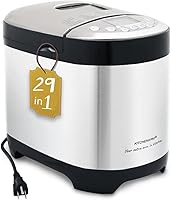
Cuisinart Compact vs Convection Bread Maker: Which Is Better? (October 2026)
Choose the Cuisinart 12-Program 2 lb Bread Maker for a counter-friendly design and a simpler program set, or the convection model for its fan, automatic mix-ins and specialty cycles. Both make 1 lb, 1.5 lb or 2 lb loaves with 3 crust shades.
On this page (7 sections)
- Cuisinart compact vs convection bread maker: what changes?
- Which machine fits your counter?
- What does the convection fan change?
- Which model suits fruit, nuts and specialty recipes?
- Which model is easier to set up and use?
- What should you know about cleaning and care?
- Which Cuisinart bread maker should you choose?
For the cuisinart compact vs convection bread maker choice, pick the 12-program model for a counter-friendly design and a simpler menu, or the convection model for its fan, automatic mix-ins and specialty cycles. Both make 1 lb, 1.5 lb and 2 lb loaves with 3 crust shades.
The compact model measures 10.25 x 13.25 x 11.25 inches and has 12 programs. The convection model has 16 programs, a fan that circulates air during baking, and a dispenser for fruit and nuts.
Both machines automate mixing, kneading and baking. The right one depends on your counter space and whether the extra features match recipes you make often.

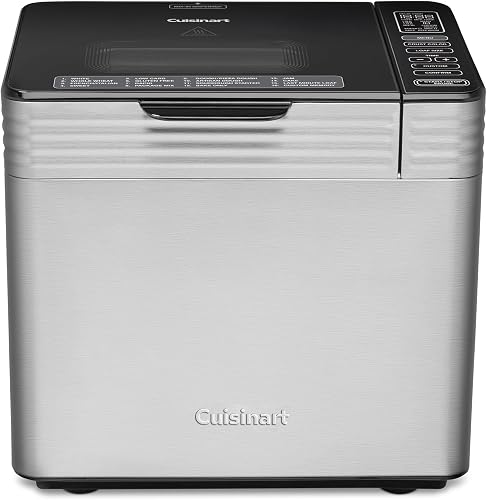
Cuisinart compact vs convection bread maker: what changes?
The convection model adds air circulation, automatic mix-ins and 4 programs; the compact model keeps the feature set simpler. The two machines have the same maximum loaf size and the same 3 crust shades.
The compact model has a vertical baking cavity and removable nonstick vertical pan. It also has audible reminders, a countdown display and a 60-minute keep-warm cycle.
The convection model adds a glass top viewing window and a removable kneading paddle. Its Custom Memory setting saves one personalized program, which can help if you repeat a recipe with specific cycle settings.
The main trade-off is straightforward: decide whether you will regularly use the fan, dispenser and added cycles. If those features would sit idle, the compact model covers the core task with fewer options to sort through.
For a broader checklist before buying, see what to look for in a bread machine. That guide can help you weigh capacity, settings and counter fit across other models.
Which machine fits your counter?
Compare width, depth and height together, then check the available space around the machine. The convection model is narrower, while the compact model is shorter and has a wider footprint.
The compact model measures 10.25 inches deep, 13.25 inches wide and 11.25 inches high. The convection model measures 12.25 inches deep, 8.85 inches wide and 13 inches high.
If you have a narrow counter, the convection model's 8.85-inch width may work well, as long as its depth and height fit. If the counter has low cabinets, its 13-inch height deserves special attention.
The compact model is a better starting point for a counter area where height is tight, but its 13.25-inch width may be a problem on a narrow shelf. Leave space to open the lid, handle ingredients and lift out the pan.
The convection model weighs 10.8 lb, while the compact model weighs 5 kg. If you plan to store the machine between uses, consider whether you'll be comfortable moving it.
How should you measure for the compact and convection models?
Measure the counter depth and width, then check the vertical clearance under cabinets. Add room for the lid to open and the pan to come out without shifting nearby appliances.
Don't decide by the word “compact” alone. The two models have different proportions, so one may fit a particular counter better even if it is larger in one dimension.
What does the convection fan change?
The fan circulates air during baking to help develop consistent crust color and texture. Choose the convection model if you want that added baking feature along with the three available crust shades.
Both machines let you select light, medium or dark crust. The convection fan gives the larger model another way to manage baking, but neither model changes the available loaf sizes.
If you usually bake a familiar sandwich loaf and already like the results from a standard bread machine cycle, the compact model's crust choices may be enough. If you want to try the fan as part of your baking routine, the convection model is the direct fit.
The compact machine also handles more than bread: its programs include cakes and pizza, and it mixes, kneads and bakes. To understand how cycles and crust options fit together, read our guide to bread machine settings.
Which model suits fruit, nuts and specialty recipes?
Choose the convection model if you often bake loaves with fruit or nuts, or want its specialty programs. Its automatic dispenser holds up to 3/4 cup and releases mix-ins during the second knead on compatible programs.
Load recipe-specified ingredients before starting instead of waiting beside the machine for a beep. The dispenser is useful when you want to schedule a bake and let the machine add mix-ins at the right point in a compatible cycle.
The convection model has 16 programs, including Gluten Free, Low Carb and Sourdough Starter. Its Custom Memory slot stores one personalized program, so you can save a preferred set of cycle settings for repeat use.
The compact model has 12 programs and supports bread and other baked goods, including cakes and pizza. It doesn't have an automatic mix-in dispenser or the convection model's Custom Memory setting.
Match specialty recipes to the machine's cycle instructions, particularly when using the delay timer. Ingredients that need to be added at a specific time may not suit a cycle that doesn't support the dispenser.
Is the Sourdough Starter program for baking a sourdough loaf?
The convection model has a Sourdough Starter program, but that name refers to preparing starter and does not confirm a full sourdough bread cycle. Check the cycle instructions if you want the machine to handle a complete loaf.
If sourdough is a regular part of your baking, compare the manual's cycle details with the recipe before buying. A starter cycle can be useful, but it should not be the only reason you choose this model.
Which model is easier to set up and use?
The compact model is a natural fit if you want a smaller program menu, while the convection model offers more automation after you learn its options. Both use digital controls and let you schedule a bake up to 13 hours ahead.
Before the first loaf, place the machine on a stable counter with room to open the lid and remove the pan. Read the recipe and manual, confirm the loaf size and crust shade, and measure ingredients carefully.
The compact model's LCD shows the countdown, current cycle and selected options. Beep reminders and a 60-minute keep-warm cycle help you follow the bake without checking the machine constantly.
The convection model has digital touch controls and an LCD display. Its delay timer can schedule a bake, and its dispenser handles compatible mix-ins during the cycle.
For either machine, use a recipe written for a bread maker and select a loaf size that matches the amount of ingredients. If you are new to the process, our first-loaf walkthrough explains the basic steps from loading ingredients to removing the loaf.
What common setup mistakes should you avoid?
Avoid choosing a program just because its name sounds close to your recipe. Check the machine instructions for the cycle, loaf size and ingredient timing, especially for gluten-free recipes or recipes with mix-ins.
Don't fill the convection dispenser beyond its 3/4-cup capacity, and don't assume it works with every program. For delayed starts, follow the recipe and manual so ingredients are ready for the cycle you selected.
What should you know about cleaning and care?
Both machines have removable kneading parts, but follow each model's care instructions for cleaning. Let the machine cool, then remove crumbs and residue without assuming the pan and body use the same method.
The compact model has a removable nonstick vertical pan and a hand-wash care instruction. The convection model's paddle can be removed before the final rise and lifted from the baked loaf with the included hook.
The convection model's care instruction is to wipe with a dry cloth. Check its manual for care of the pan, paddle and other parts before cleaning them.
Clean the pan and paddle after the machine cools, and avoid damaging the nonstick surface. For a step-by-step routine, see how to clean a bread machine pan and paddle.
Which Cuisinart bread maker should you choose?
Pick the compact model for a counter-friendly design and a simpler 12-program menu; choose the convection model for automatic mix-ins, air circulation and its wider cycle selection. Both offer the same 1 lb, 1.5 lb and 2 lb loaf sizes with 3 crust shades.
Choose the compact model if your regular routine is basic loaves, cakes or pizza and you don't need a dispenser. Its LCD, delay-start timer and keep-warm cycle cover useful everyday controls without adding the convection model's extra features.
Choose the convection model if you often bake with fruit or nuts, want to try the fan, or expect to use Gluten Free, Low Carb or Sourdough Starter cycles. The Custom Memory setting is also useful when you want to save one personalized program.
Skip the convection model if you don't expect to use its dispenser, fan or added cycles. Skip the compact model if automatic mix-ins or the convection features are priorities you will use often.
For the cuisinart compact vs convection bread maker decision, start with your counter measurements and the recipes you make most. Then compare other convection bread makers or browse our bread maker reviews if neither model fits your needs.
Frequently asked questions
What is the main difference between the Cuisinart compact and convection bread maker?
The convection model adds a fan that circulates air during baking, an automatic fruit-and-nut dispenser and 16 programs. The compact model has 12 programs and a counter-friendly design.
Both make 1 lb, 1.5 lb and 2 lb loaves, with 3 crust shades.
Does the Cuisinart convection bread maker make larger loaves?
No. Both models make loaves up to 2 lb and offer 1 lb, 1.5 lb and 2 lb sizes.
If you need more bread per batch, compare machines with a larger stated capacity instead of choosing between these two.
Which Cuisinart bread maker is more compact?
The 12-program model is described as counter-friendly and measures 10.25 x 13.25 x 11.25 inches. The convection model measures 12.25 x 8.85 x 13 inches, so it is narrower but taller and deeper.
Measure your counter and cabinet clearance before deciding.
Does the convection model add fruit and nuts automatically?
Yes. Its dispenser holds up to 3/4 cup and releases mix-ins at the second knead on compatible programs.
Add recipe-specified ingredients before starting, and confirm that your chosen cycle supports automatic dispensing.
Which Cuisinart bread maker should a beginner choose?
Choose the 12-program model if you want a counter-friendly design, 3 loaf sizes and a straightforward set of options. The convection model suits beginners who already know they want automatic mix-ins, a baking fan or its specialty cycles.
Start with a recipe written for a bread machine.