What Do You Need to Make Bread in a Bread Maker?
To make bread in a bread maker you need a machine with a bread pan and kneading paddle, plus flour, yeast, water or milk, salt and usually a little sugar or fat. Add a measuring cup and spoon, and know which menu and loaf size to pick.
On this page (10 sections)
- What equipment comes with a bread maker?
- What ingredients do you need for a basic loaf?
- Which settings should you choose on a bread maker?
- Do you need special flour for a bread maker?
- What small tools make bread machine baking easier?
- Why does the order of ingredients matter?
- Does the machine shape the loaf for you?
- How do you clean up after baking?
- Which bread maker suits a first-time baker?
- Sources
To make bread in a bread maker you need the machine, its bread pan and kneading paddle, plus flour, yeast, water or milk, salt and usually a little sugar or fat. A measuring cup and spoon, or a kitchen scale, round out the basic kit.
That is the short answer to what do I need to make bread in a bread maker. The rest of this guide covers each item, which settings to choose and the machines that make the process easier.
Bread machines mix, knead, rise and bake in one pan, so you don't need a mixer, a loaf tin or an oven. You load the pan, pick a menu and press start.
What equipment comes with a bread maker?
A bread maker comes with a nonstick bread pan and a kneading paddle, and many models add a recipe book and measuring cup and spoon. You supply the ingredients and a few small kitchen tools.
The pan sits inside the machine and holds the dough through every cycle. The paddle clicks onto a shaft in the base of the pan and does the kneading, and after baking you lift the pan out by its handle.
Bread machine recipes use small amounts of yeast and salt, so a measuring spoon earns its place. If your machine doesn't include a cup and spoon, any set works.
You'll want a cooling rack and a spatula or thin knife to loosen the loaf. A pastry brush helps if you glaze the top before baking on a machine with that option.
Some machines have an automatic fruit and nut dispenser. That is an extra, not a need, and you can add raisins or seeds by hand when the machine beeps.
The Cuisinart shows what a complete kit looks like. Its nonstick vertical pan lifts out for cleaning, and the LCD shows the countdown and the selected crust and size.
Cuisinart backs it with a limited 3-year warranty.
That removable pan is worth checking on any machine you consider. A pan you can lift out is easier to wash and easier to load without spilling flour into the baking chamber, while a fixed pan makes both jobs messier.
The machine body stays put on the counter, and its footprint decides whether it earns counter space or lives in a cupboard. A compact body with a full-size vertical cavity bakes up to 2 lb loaves without taking over the worktop.
What ingredients do you need for a basic loaf?
A basic bread machine loaf uses flour, yeast, water or milk, salt and a little sugar or oil. Those five items cover most white and whole wheat recipes.
Flour is the main ingredient. Bread flour has more gluten and makes a taller loaf, and all-purpose flour is cheaper and works too, with a slightly softer result.
KITCHENARM supports bread flour and all-purpose flour in its bread menus, which matters if you want to keep costs down. Its recipe book lists 77 recipes, and more sit on its KitchenArm Recipe Cloud.
Yeast comes as active dry, instant or bread machine yeast. Instant and bread machine yeast go straight into the dry ingredients, while active dry often needs a short rest in warm water first.
Water or milk brings the flour together. Milk adds a little richness and browning, and water is the simple choice for a first loaf.
Salt adds flavor and controls how fast the yeast works. Sugar feeds the yeast and helps browning, and oil or butter softens the crumb and keeps the loaf tender for another day.
Keep a spare jar of yeast in the fridge once it is open. Yeast loses strength over time, and a fresh jar is the cheapest insurance against a flat loaf, so check the date on the packet before you bake.
Which settings should you choose on a bread maker?
Start with the basic menu, the middle loaf size and a medium crust. That combination is the safest first bake on almost any machine.
The basic menu suits white and most all-purpose flour loaves. Sweet, French, whole wheat and gluten free menus change the knead, rise and bake times to fit those recipes, so pick the menu your recipe names.
Loaf size sets how much dough the machine makes. A 2 lb setting gives a large loaf, while 1 lb suits one or two people.
Crust color changes the final bake time: dark bakes longer, light bakes less.
The delay timer lets you load the pan and set the finish time. Use it for recipes without fresh milk, eggs or cheese, since those can spoil in a warm pan.
KITCHENARM adds a one-press feature that saves your last menu, size and crust settings, so the next loaf of the same recipe needs only the start button.
Its fully customizable HOME MADE menu lets you set each cycle time for your own recipes. It holds up to four personalized menus, which suits bakers who fine-tune their own loaves.
You can also adjust the time of a cycle while a menu is running, and set your own fermentation and baking temperature preferences.
What do the non-bread menus do?
Not every cycle makes a loaf. KITCHENARM lists 7 non-bread menus alongside its 21 bread menus.
These cover cakes, jams and yogurt, so the machine earns its counter space beyond sandwich bread.
The Cuisinart takes a similar view with its 12 programs. Its booklet covers cakes, pizza and other treats as well as bread.
The Amazon Basics set adds jams to its 14 settings.
A cake or jam cycle is a good way to learn the machine without worrying about yeast. You still measure carefully, but there is no rise to judge, and once you trust the paddle and pan you can move on to bread.
Do you need special flour for a bread maker?
No, you don't need special flour. Bread flour gives the most reliable rise, and all-purpose flour works for many recipes, while whole wheat flour needs a little more water and often a rest before baking.
Bread flour has a higher protein content, so it forms more gluten during kneading. That gluten traps gas and lifts the loaf, and it is the flour most bread machine recipes name.
All-purpose flour has less protein. Loaves come out a little shorter and softer, but they still taste good, and if your recipe calls for bread flour and you only have all-purpose, expect a slightly denser loaf.
Whole wheat flour absorbs more water and has less gluten. Many machines have a dedicated whole wheat menu that adds a rest period, and KITCHENARM makes 100% whole wheat bread, and 100% dark rye bread, without added gluten.
Gluten free baking is different because there is no gluten to stretch. Machines with a gluten free menu use a single rise and a longer bake to hold the structure together, and a gluten free loaf also needs a blend flour rather than plain wheat flour, so follow the recipe book's blend closely.
Store flour in a sealed container away from heat. Whole wheat flour goes rancid faster than white flour because of its oils, so buy it in smaller bags if you bake less often.
What small tools make bread machine baking easier?
A kitchen scale, a liquid measuring cup and a cooling rack are the three tools that matter most. None is required, but each removes a common cause of a failed loaf.
A scale weighs flour by mass, which is more consistent than scooping cups. Spoon flour into a cup and level it if you don't have a scale, rather than packing it down.
A clear liquid cup lets you read the water line at eye level. Warm water helps yeast start, but hot water can kill it, so lukewarm is the safe target.
A cooling rack lets air move under the loaf so the base doesn't go soggy. Leave the loaf in the pan for a few minutes after baking, then turn it out onto the rack.
Oven mitts help when you lift a hot pan. A soft brush or a small sieve dusts flour over the top if you like a finished look.
A thin spatula is useful for loosening the loaf from the pan edges before you turn it out. A serrated knife slices soft bread without crushing it, and neither costs much, and both make the first bake calmer.
Why does the order of ingredients matter?
Add ingredients in the order your recipe gives, which is usually liquid first, then flour, then yeast on top. That keeps the yeast away from wet salt and sugar at the start.
When the machine begins kneading, the paddle pulls the flour into the liquid from the bottom up. Yeast sitting in a dry pocket on top stays inactive until the dough forms.
Salt and yeast should not touch directly. Salt slows yeast, which is fine once the dough is mixed but not while the yeast is still starting.
Sugar and fat can go in with the liquid. If your machine has a fruit and nut dispenser, put add-ins there, otherwise wait for the beep and drop them in by hand.
Check the dough after the first few minutes of kneading. It should form a soft ball that clears the sides of the pan.
Add a spoon of water if it looks dry and crumbly, or a spoon of flour if it sticks. Look through the lid rather than opening it, since a draft can chill the dough.
Does the machine shape the loaf for you?
Yes, the machine does everything from mixing to baking in its own pan. The loaf takes the shape of the pan, so you don't shape it by hand or move it to an oven.
Vertical pans make taller, narrower loaves. Horizontal pans make wider loaves that slice more like store bread, and neither is better; it comes down to the slices you like.
The paddle stays in the pan during baking, so the finished loaf has a small hole in the base. Many machines have a remove-paddle alarm near the end of the last rise, and pulling the paddle out then shrinks the hole to a small dimple.
KITCHENARM lists this remove-paddle alarm among its features.
The crust forms against the pan walls. A nonstick pan releases the loaf with a light shake.
Hand wash the pan rather than putting it in a dishwasher, which can wear the coating. The Cuisinart and KITCHENARM pans carry hand wash only care.
Check the pan coating before each bake. A torn coating lets dough stick and makes the loaf harder to remove, so use wooden or silicone tools in the pan, not metal ones.
The Amazon Basics ExpressBake setting suits days when you want bread fast. Its 14 settings cover breads, doughs, gluten free options and jams, with a programmable LCD and a nonstick pan.
How do you clean up after baking?
Let the pan cool, then wash it by hand with warm water and a soft cloth. Wipe the machine body with a damp cloth and keep water out of the base.
The paddle pulls off its shaft for cleaning. Soak it in warm water if dough sticks, then rinse and dry it, and skip abrasive pads or harsh cleaners on the nonstick coating.
Wipe crumbs out of the baking chamber once the machine is fully cool. Crumbs near the heating element can smoke on the next bake.
Dry every part before you store it. A damp pan left in a closed machine can pick up a musty smell.
Store the machine with the lid closed and the pan inside, so the paddle and cup don't get lost. Keep the recipe book nearby for the first few weeks while you learn the menus.
Clean the lid seal and the small window with care. Dough can collect there over many bakes, and a cotton swab reaches the tight spots without scratching.
Which bread maker suits a first-time baker?
The best bread maker for a beginner is one with clear menus, a few loaf sizes and a recipe book you can follow. Extra programs only help if you plan to use specialty flours or custom cycles.
The Cuisinart 12-program machine keeps the choice simple. Three crust colors, three loaf sizes and a compact footprint suit a small kitchen.
Its 60-minute keep warm cycle means a loaf stays warm if dinner runs late. Its 13-hour delay timer covers an overnight loaf.
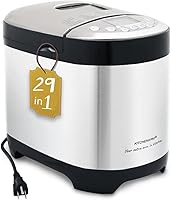
The KITCHENARM 29-in-1 gives you far more menus, including sourdough, brioche and keto cycles. That breadth suits a baker who wants to try many styles without buying a second machine.
Its 2-year product warranty and lifetime customer service, which includes recipe customization, add backup for a new baker.
Our bread maker reviews compare more models by menu range and loaf size. Read our guide to what to look for in a bread machine before you compare specs side by side.
If you want the lowest spend for a first machine, start with our budget bread maker picks.
Pick the Cuisinart if you want simple, compact and reliable. Pick the KITCHENARM if you want many menus and custom cycles.
Both come with the pan, paddle and recipes you need on day one.
The Amazon Basics sits between them with 14 settings and a fast ExpressBake cycle, a fair choice when speed matters more than menu range.
Check the power supply before you buy. All three machines run on 120 volts and fit US and Canadian outlets, and KITCHENARM offers a European version for buyers outside North America.
Sources
- KITCHENARM product data for the 29-in-1 Bread Machine (menus, loaf sizes, recipes, warranty)
- Cuisinart product data for the 12-Program 2 lb Bread Maker (programs, crust colors, warranty)
- Amazon Basics product data for the 2 lb Bread Maker (settings, ExpressBake, crust colors)
Frequently asked questions
Do I need bread flour or can I use all-purpose flour in a bread maker?
Both work in many machines. Bread flour has more gluten and gives a taller, chewier loaf, while all-purpose flour is cheaper and makes a softer, shorter loaf.
KITCHENARM supports both flours in its bread cycles, so check your machine's recipe book before you buy a bag.
Can I make bread without yeast in a bread maker?
You can make quick breads, cakes and soda-style loaves with baking powder, which need a cake or quick-bread menu. Traditional yeast bread needs yeast to rise.
Most bread machines include a cake menu for this reason.
Is a scale better than a measuring cup for bread machine recipes?
A scale gives more repeatable results because it weighs flour by mass rather than by volume. If you use cups, spoon the flour into the cup and level it.
Either way, follow one recipe closely before you adjust anything.
How much bread does a 1 lb loaf setting make?
A 1 lb setting makes a small loaf that suits one or two people for a few days. The 1.5 lb size is a common middle ground.
Choose 2 lb when you want leftovers for toast or sandwiches.
Can I put all the ingredients in the bread maker at once?
Most recipes have you add liquid first, then flour, then yeast last on top. The machine's kneading paddle mixes them during the first cycle.
Follow the order in your machine's recipe book, because yeast touching wet salt early can slow the rise.