Cuisinart Compact Bread Maker Review: Worth It? (November 2026)
The Cuisinart 12-Program 2 lb Bread Maker is a solid buy if counter space is tight and you want simple loaves, cakes and jam. Buy the KITCHENARM 29-in-1 instead if you want gluten-free, sourdough or your own custom cycles.

On this page (9 sections)
- The Cuisinart compact bread maker at a glance
- Who the Cuisinart bread maker suits
- The specs that matter in daily use
- Setup and first bake
- Cleaning and care
- The trade-offs to know before buying
- Alternatives worth comparing
- How this Cuisinart compares to its bigger sibling
- Verdict: is the Cuisinart compact bread maker worth it?
The Cuisinart 12-Program 2 lb Bread Maker is a good buy for a small kitchen, because it bakes a full-size vertical loaf in a short, counter-friendly cabinet. You get 12 programs, three crust colors, three loaf sizes, a 13-hour delay timer and a 3-year limited warranty.
It isn't the most capable machine in its price range, though. If you want gluten-free menus, sourdough, or custom knead and rise times, the OSIPOTO or KITCHENARM machines below give you more to work with.
This Cuisinart compact bread maker review covers where it wins and where it doesn't.
The Cuisinart compact bread maker at a glance
The Cuisinart earns its place on a narrow counter with a full-size pan. Its 10.25 in depth and 13.25 in width make it one of the shorter machines you can buy that still bakes up to 2 lb.
Cuisinart 12-Program 2 lb Bread Maker: Best for small counters

- 12 menu programs
- 3 crust colors and 3 loaf sizes
- 13-hour delay-start timer
- Compact vertical baking cavity
A short, narrow machine that bakes up to 2 lb loaves and still finds room on a busy counter. The 12 programs cover basic bread, cakes and jam without a long menu to learn.
Pros
- Compact footprint for a full-size pan
- 3 crust colors and 3 loaf sizes
- 13-hour delay timer and 60-minute keep warm
- Limited 3-year warranty
Cons
- 12 programs is fewer than the rivals below
- Hand wash only
- No custom cycle programming
Cuisinart fits a vertical baking cavity into that small body, so the loaf rises upward instead of spreading sideways. The result is a taller, squarer slice than a horizontal pan gives you.
The model number is CBK-110P1ES, sold under part number CBK-110P1, and the body mixes plastic with stainless steel in a silver and black finish. The 12 menus cover more than sandwich loaves: Cuisinart lists cakes, pizza and other treats alongside the bread programs, plus recipes for jams and sauces.
At 550 watts and 120 volts, it draws the same power as most bread makers in this class. The short cabinet is the headline, but the full-size pan underneath it is what keeps this from being a toy.
Who the Cuisinart bread maker suits
Buy it if your kitchen is short on counter space and you bake simple white, whole wheat, French or sweet loaves most weeks. The 12 programs also cover cakes and pizza dough, so it earns its spot beyond sandwich bread.
It fits a first-time bread machine buyer well. The LCD shows the countdown, the current cycle and your selected options, and audible beeps remind you when to add ingredients.
A beginner can load the pan, press start and read the countdown without learning a long menu first.
Skip it if gluten-free baking is a priority, or if you like tweaking rise times for sourdough. The menu is short by modern standards, and there's no custom cycle option.
A two-person household also gets more from the 1 lb and 1.5 lb settings than from the full 2 lb, since a smaller loaf stays fresher. A family or anyone prepping sandwiches for the week will lean on the 2 lb size.
The keep-warm cycle helps if dinner runs late. Bread that finishes early waits up to 60 minutes without going cold.
The specs that matter in daily use
Capacity and footprint are the two numbers that shape how the Cuisinart fits your routine. It bakes 1 lb, 1.5 lb or 2 lb loaves, each with light, medium or dark crust, so one machine covers a single person or a family of five.
The cabinet measures 10.25 in deep, 13.25 in wide and 11.25 in tall. Plan overhead clearance for the lid and leave the vents clear; the machine needs airflow, not just a flat surface.
At 11.25 in tall it still needs space above it to swing the lid open and lift a hot pan out.
Cuisinart lists the machine at 550 watts and 120 volts, which is normal for a bread maker. The 13-hour delay timer means you can set up at night and wake to bread.
The 60-minute keep-warm cycle holds it after the bake ends. That delay window is long enough to cover an overnight sleep plus a late breakfast.
Cuisinart rates it for hand washing only. That's a real daily difference: the nonstick pan and paddle need gentle washing rather than a dishwasher cycle.
The warranty runs three years and is limited, so it covers manufacturing defects rather than normal wear. The vertical pan and paddle come out for cleaning, so the hand wash is confined to those two pieces.
Crust colors and loaf sizes in practice
The three crust colors change how long the bake runs at the end of the cycle. Light gives you a softer, paler crust that suits sandwich bread and kids.
Dark pushes the bake longer for a crisper, more browned outside. Medium sits between the two and is the safe default for a first loaf.
The three loaf sizes matter just as much. A 1 lb loaf uses less flour and finishes sooner, which is handy when you bake often and want fresh bread rather than a stockpile.
The 2 lb size fills the vertical pan and gives you the tall slices the cavity is designed for. The two settings work together, so try a few combinations before settling on your usual.
Setup and first bake
Set the machine on a firm, level, dry counter near an outlet, with room around the vents and space to open the lid. Wipe the pan and paddle before the first use and follow Cuisinart's first-use instructions if the manual asks for a short cycle.
Add ingredients in the order Cuisinart's recipes list, usually liquids first, then flour, then yeast last on top. A measuring cup and spoon matter more than the machine here; small errors in flour or water change the crumb.
Keep the yeast away from salt and liquid until the machine starts to knead, which is why it goes in last.
Pick a program, choose your loaf size and crust color, then press start. The display counts down and beeps if the recipe calls for added ingredients.
Let the loaf cool before slicing so the interior sets. The delay timer works the same way: load the pan, set the delay, and the machine starts on its own so the bread finishes at the hour you chose.
If you're weighing this model against its bigger sibling, our Cuisinart Compact vs Convection Bread Maker comparison covers the capacity and menu differences.
Cleaning and care
Cuisinart specifies hand washing only for the pan and paddle, and that's the habit to build. Warm water, a soft sponge and mild soap keep the nonstick coating intact; abrasive pads wear it down.
Wipe the interior and exterior with a damp cloth after the machine cools. Don't immerse the body in water or let liquid run into the vents or around the control panel.
Dry everything fully before storing so the pan doesn't sit damp. Coil the cord loosely rather than wrapping it tight.
The 3-year limited warranty covers manufacturing defects, not wear from harsh cleaning. Keep your receipt and register the machine if Cuisinart's paperwork asks you to, since a registered purchase is easier to service later.
The trade-offs to know before buying
The biggest trade-off is the short menu. Twelve programs cover most everyday bread, but they don't stretch to sourdough, keto, sugar-free or brioche the way a 17- or 29-menu machine does.
If you bake the same white or whole wheat loaf most weeks, the shorter list costs you nothing. If you like trying a new style every month, you'll run out of options.
You also can't program your own knead, rest, rise and bake times. That matters if you like adjusting a recipe's fermentation for a different flour or a cold kitchen.
The machine runs its preset sequence, and your only levers are program, loaf size and crust color.
The vertical pan shape gives tall slices, which some people love and others find awkward for sandwiches. It's worth thinking about before you commit.
Tall slices toast well and fit a square lunchbox, but they can be too tall for a wide toaster slot.
Finally, the hand-wash rule adds a little time after every bake. If easy cleanup matters more than compact size, an alternative with simple pan removal may suit you better.
The trade-off is honest: you save counter space and give up menu depth and dishwasher convenience.
Alternatives worth comparing
The Cuisinart is the best pick here for small counters, but two rivals beat it on menu choice and starter extras. Compare them side by side before you decide.
OSIPOTO Bread Maker: best overall
The OSIPOTO carries the highest score of the three and is the better machine if your counter has room. Its 17 programs reach French, whole wheat, pizza dough and jam, and the box adds a measuring cup, spoon, kneading paddle, recipe book and user manual.
That starter kit means you can bake the first loaf without hunting for a cup or a spoon.
It measures 13.19 in deep, 11.42 in wide and 13.78 in tall and weighs 11.4 lb, so it needs more space than the Cuisinart. The delay timer and 1-hour keep warm match the Cuisinart's convenience features.
Its nonstick pan is removable and easy to clean, though it is still rated for hand washing. If your counter can take the deeper cabinet, the extra five programs and the included accessories make it the stronger all-rounder.
The 2-year warranty is shorter than the Cuisinart's three years, so weigh that against the wider menu.
KITCHENARM 29-in-1 Bread Machine: best for gluten-free and custom bakes
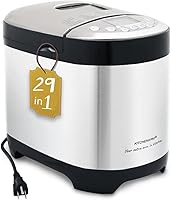
The KITCHENARM is the pick if you want to program your own bread. Its 29 menus include gluten-free, sourdough, salt-free, sugar-free and keto settings, and the HOME MADE menu lets you set each knead, rest and rise time.
You can create up to four personalized menus and even adjust a cycle's time while it runs.
KITCHENARM supports all-purpose flour as well as bread flour, which helps if you don't want to buy a special flour for every bake. The 15-hour delay timer and 15-minute power interruption recovery help on busy days.
The 1-press start saves your menu, loaf size and crust color for the next bake, so a repeat recipe takes one button. It's deeper and heavier than the Cuisinart, at 9.6 lb, so check your counter depth first.
It's ETL certified for US and Canada, and the warranty runs two years with lifetime customer service. Cuisinart's three-year coverage is longer, but KITCHENARM's menu depth is far greater.
To compare the wider field, the Hamilton Beach Bread Maker Review covers a budget-friendly digital option, and Breville vs Zojirushi Bread Maker looks at the step-up machines.
How this Cuisinart compares to its bigger sibling
The Cuisinart Compact and the Cuisinart Convection share a brand and a vertical pan, but they differ in menus and size. The compact model here sticks to 12 programs and a smaller cabinet; the convection version adds options that suit more ambitious baking.
Neither is a better machine outright. The compact fits more kitchens, which is why it wins this review for small spaces.
The convection version appeals to anyone who wants a broader menu in the same brand family. The compact also asks less of your counter in depth, so it slips under a low cabinet where the bigger model won't.
Our full Cuisinart compact vs convection comparison breaks down those differences program by program.
Verdict: is the Cuisinart compact bread maker worth it?
Yes, buy the Cuisinart 12-Program 2 lb Bread Maker if small footprint and simple everyday loaves are your priority. It bakes up to 2 lb, gives you three crusts and three sizes, and holds bread warm after a 13-hour delayed start.
The vertical pan turns out tall slices, the LCD makes the countdown easy to read, and the three-year limited warranty is the longest of the three machines here. For a first bread maker in a small kitchen, that mix is hard to beat.
Skip it if you want gluten-free menus, sourdough settings or custom cycle times. The OSIPOTO Bread Maker is the better all-rounder when space allows, and the KITCHENARM 29-in-1 suits bakers who want to program their own recipes.
Both ask for more counter depth and both are heavier, so the Cuisinart still wins on fit. If your baking stays in the basic, whole wheat, French and sweet lane, the short menu is not a weakness.
It's a shorter learning curve, and the loaf that comes out is the same size as the one from a much larger cabinet.
Frequently asked questions
How big is the Cuisinart compact bread maker?
It measures 10.25 in deep, 13.25 in wide and 11.25 in tall. That's the cabinet only, so leave room above the lid to open it fully and plan space around the vents before you settle it on the counter.
Does the Cuisinart bread maker make gluten-free bread?
Cuisinart's own materials mention gluten-free recipes among the recipes the machine comes with. If gluten-free baking is your main reason for buying, the KITCHENARM 29-in-1 has a dedicated gluten-free menu and four customizable cycles that suit it better.
Can you bake a 2 lb loaf in the Cuisinart bread maker?
Yes. You can choose 1 lb, 1.5 lb or 2 lb loaves, each with light, medium or dark crust.
For a household of two, the 1 lb setting wastes less bread; the 2 lb size suits a family or a week of sandwiches.
How long does a loaf take in the Cuisinart bread maker?
Cuisinart doesn't publish a single bake time because each of the 12 programs runs its own knead, rise and bake sequence. Basic white loaves typically finish within a few hours, and the LCD shows the countdown so you can plan around it.
Can you delay the Cuisinart bread maker overnight?
Yes. The 13-hour delay-start timer lets you load the pan at night and have fresh bread in the morning.
Keep the loaf on the 60-minute keep-warm cycle only briefly, since bread left warming longer can turn soggy.