Do You Need a Bread Maker to Make Bread?
No, you don't need a bread maker to make bread. An oven, a bowl and a loaf pan cover most recipes. A bread maker earns its counter space when you want dough kneaded and baked on a timer without watching the clock.
On this page (8 sections)
- What does a bread maker do that an oven cannot?
- When is an oven and loaf pan enough?
- What does a bread maker cost you in space and cleaning?
- Which bread machine suits each kind of baker?
- Do you need a bread maker to make bread if you bake weekly?
- Can you use a bread maker for dough only?
- What do you need before your first loaf either way?
- How do you decide between a bread maker and an oven?
No, you don't need a bread maker to make bread. An oven, a mixing bowl and a loaf pan cover most recipes, and your hands or a stand mixer do the kneading.
So do I need a bread maker to make bread? Only when you want the machine to take over the kneading, rising and baking.
The real question is how much of the process you want to hand over. A bread maker is one appliance that mixes, kneads, proofs and bakes inside its own pan.
An oven method splits those steps across your counter and your attention.
This guide compares the two approaches by time, effort, result and cleanup. You'll also see the bread machines that make the case for buying one, and the setup a no-machine baker needs first.
By the end you'll know which side of the line you sit on.
What does a bread maker do that an oven cannot?
A bread maker does the full loaf in one pan, from mixing to baked crust, on a schedule you set. An oven bakes bread but leaves the kneading, rising and timing to you.
That difference in who does the work is the whole decision.
Here is how the steps split between the two methods:
| Step | Bread maker | Oven method |
|---|---|---|
| Mixing | In the pan | In a bowl |
| Kneading | Motor-driven blade | Your hands or a mixer |
| First rise | In the warm pan | In a covered bowl |
| Shaping | Not needed | By hand |
| Final rise | Not needed | On the counter or in a pan |
| Baking | Inside the machine | In your oven |
| Timing | Programmed cycle or delay timer | You watch the clock |
The saving isn't just muscle. It's attention.
A machine runs its cycle while you work, sleep or leave the house.
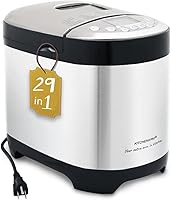
KBS says its 710W motor and ribbed kneading blade copy artisan kneading, and its pan runs 17 programs with a 15-hour delay timer. That's the pitch in one sentence: the machine does the sequence, you choose the loaf.
Where a bread maker actually saves you work
The biggest saving is the middle of the process. Kneading and the first rise are the two stages that need a warm spot and a block of time.
A machine handles both without you checking on the dough.
The second saving is shaping. Bread maker cycles skip the knock-back and hand-shaping that oven loaves need.
Dough goes in the pan as ingredients and comes out as a finished loaf.
The third is scheduling. The KBS has a 15-hour delay timer, the Hamilton Beach counts down on its display and keeps bread warm for an hour, and the Oster has a 13-hour delay timer.
You can load the pan at night and wake up to baked bread.
A bread maker replaces your hands and your timer, not your oven's crust. The loaf bakes in its own chamber, so the crust comes from the pan and the machine's heat.
When is an oven and loaf pan enough?
An oven and loaf pan are enough when you bake occasionally and enjoy the process. If bread is a weekend project rather than a weekly staple, you already own everything you need.
The extra appliance would mostly take up counter space.
The no-machine method needs only a few basics:
- A large mixing bowl for the dough
- A loaf pan or a baking stone
- A warm spot for the first and second rise
- A clean towel or plastic wrap to cover the dough
- An oven thermometer to confirm the temperature
Flour, water, yeast and salt are the same either way. A bread maker doesn't use special ingredients, and an oven recipe works in a machine once you match the flour and liquid amounts to its pan.
Manual baking also gives you more control over shape. You can bake a round boule, a baguette or a braided loaf.
A bread maker produces one shape, set by its pan.
Choose the oven method if you bake less than once a week.
If you do go manual, read our bread maker reviews only after you've ruled the machine out. That page helps buyers who already want one.
What does a bread maker cost you in space and cleaning?
A bread maker costs about a square foot of counter space and one pan to wash. That's the honest trade against an oven method that leaves you a bowl, a loaf pan and a floured counter.
Neither is a big job, but the shapes differ.
The machines here are compact for their capacity. The KBS measures 9.76 in deep by 13.58 in wide by 12.21 in high and weighs 14.7 lb.
The Hamilton Beach is 13.9 in deep by 11.4 in wide by 11.2 in high at 11.9 lb. The Oster is 8.81 in deep by 11.55 in wide by 13.02 in high at 10.2 lb.
Cleaning splits in the machine's favor. You wash the pan and paddle, not a mixing bowl plus a loaf pan plus the counter.
KBS says its ceramic pan and paddle are nonstick and easy to clean. Hamilton Beach says its PFAS-free nonstick pan and paddle are dishwasher safe.
Oster asks for hand washing.
The catch is the pan itself. Bread maker pans have a central paddle hole and a fixed shape.
You can't scrape them as freely as a plain loaf pan, and the paddle leaves a small notch in the bottom of the loaf.
Count the counter space before the convenience. If your kitchen has no spare square foot, the oven method stays the practical choice no matter how good the machine.
Which bread machine suits each kind of baker?
The machine to buy depends on what you want it to do. These 3 models cover the main buying reasons, from a large family loaf to gluten-free baking to speed.
Each one earns its place for a different baker.
Our score weighs specs, features and how well each model fits what a bread maker buyer wants. A high score means the machine covers more of the jobs below, not that every baker needs its top features.
KBS Pro 2.2 lb: the do-everything machine for families
The KBS Pro suits a household that bakes often and wants one machine to cover most bread styles. Its 17 programs and one custom setting reach from basic white to sourdough, cake, jam and yogurt.
The 2.2 lb top capacity and 3 loaf sizes let you scale from a small loaf up to a family-size one.
The automatic dispenser drops nuts or fruit in during the cycle, so you don't open the lid to add them. KBS also includes a 53-recipe book, two paddles and a heat-resistant glove in the box.
The ceramic pan is the feature that separates it from the other two here.
Pick the KBS for variety and size range. It's the strongest fit when one machine has to handle gluten-free, whole wheat and sourdough loaves for a busy family.
Skip it if you only bake basic white bread and don't need 17 programs.
Our what to look for in a bread machine guide explains which of those features matter most before you commit.
Hamilton Beach Digital: the simple choice for gluten-free bakers
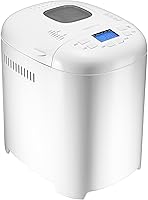
The Hamilton Beach Digital Bread Maker suits a first-time machine buyer who wants clear controls and a gluten-free cycle. It runs 12 settings, including Basic, French, Gluten-Free, Whole Grain and three Express sizes.
A digital display counts down the cycle so you know when bread is ready.
It beeps before the second kneading so you can add fruit, nuts or seeds by hand. The pan and paddle are dishwasher safe, which keeps cleanup quick.
Its 2 lb capacity covers loaves from 1 lb up to 2 lb.
Pick the Hamilton Beach for straightforward everyday baking. The cycle list is shorter than the KBS but covers the breads most people bake.
Its beep for add-ins means you're nearby at that moment, so it suits bakers who are often home.
If you're weighing a lower price, our best budget bread maker page covers the cheaper end of the market.
Oster ExpressBake 2 lb: the fast option for fresh bread in an hour
The Oster ExpressBake suits a baker who wants bread now rather than tomorrow morning. Its ExpressBake function bakes a loaf in an hour or less.
That's the shortest cycle of the three machines here.
It also has 12 settings with Gluten-Free, 3 crust choices and an automatic dispenser for nuts and fruit. The 13-hour delay timer and 60-minute keep-warm cover planned baking.
The capacity runs from 1.5 lb to 2 lb.
Pick the Oster when speed is the point. It fits a household that decides to bake in the afternoon and wants bread by dinner.
Skip it if you need the smallest 1 lb loaves or the widest program list, since its capacity starts at 1.5 lb.
Do you need a bread maker to make bread if you bake weekly?
Yes, a bread maker is worth it if you bake at least once a week and value the time saved.
That's the case where the appliance pays for itself in counter space.
Weekly baking adds up. Each oven loaf takes time for kneading, two rises and baking.
A machine compresses that into one cycle you start and walk away from.
The delay timer is the feature that changes routines most. The KBS runs a 15-hour delay, the Oster runs 13 hours and the Hamilton Beach counts down on its display.
You can set a loaf to bake before you wake up or before you get home.
Weekly baking also means more gluten-free or whole wheat loaves for many households. Those doughs are harder to handle by hand.
A machine's dedicated cycles remove the guesswork about mixing and rise time.
Go with a machine if bread is a weekly habit. Stay with the oven if it's a monthly treat.
The deciding question isn't skill, it's frequency and how much you want the process handled for you.
Can you use a bread maker for dough only?
Yes, you can use a bread maker for dough only. Each machine here has a Dough program, so it mixes and kneads and you shape and bake in your own oven.
That's the middle path for bakers who want the machine's kneading but the oven's crust.
This option suits anyone who likes shaping loaves but dislikes the sticky work. You get consistent kneading and a controlled first rise, then take the dough out for the finish.
The KBS lists Dough among its 17 programs. The Hamilton Beach lists Dough and Artisan Dough among its settings.
The Oster lists Dough among its 12 settings.
Baking outside the machine also gives you shapes the pan can't make. You can form a round loaf, a braid or rolls.
The machine becomes a mixer and proofing box rather than the whole bakery.
Use dough-only mode if crust matters to you. Bread baked in a machine has a crust set by its pan.
Bread finished in a hot oven gets the browning and texture many bakers prefer.
What do you need before your first loaf either way?
You need the same core ingredients and a way to measure them before your first loaf, whether you use a machine or an oven. Bread is flour, water, yeast and salt.
The method changes the tools, not the shopping list.
A machine adds its own pan and paddle, which come in the box. An oven method needs a bowl and a loaf pan you likely already own.
Either way, an accurate scale helps more than volume cups for consistent loaves.
If you're building a machine setup from scratch, our what do I need to make bread in a bread maker page lists the accessories and ingredients in order. The KBS kit is the most complete of the three, with measuring cups and spoons, two paddles, a paddle hook, a glove and a recipe book.
Buy the ingredients first, the machine second. You can bake a good loaf in an oven this week while you decide.
A machine only makes sense once the baking habit is already there.
How do you decide between a bread maker and an oven?
Decide by how often you bake and how much of the process you want to hand over. That's the whole answer to do you need a bread maker to make bread.
Start with these questions:
- How often will you bake? Weekly or more points to a machine.
- Do you want to knead and shape by hand, or would you rather load a pan?
- Is gluten-free or whole wheat bread part of your routine?
- Do you have a spare square foot of counter space?
- Would a delay timer change when you eat fresh bread?
If most answers point to the machine, pick by the job you need done. The KBS Pro 2.2 lb covers the widest range for families.
The Hamilton Beach Digital keeps everyday baking simple. The Oster ExpressBake wins when speed matters most.
If the answers point to the oven, spend the money on a scale and a good loaf pan instead. You can always add a machine later once the weekly habit sticks.
For buyers who are ready, our bread maker reviews page compares the wider field.
The rule is simple. Pick a bread maker if you bake weekly and want the kneading and timing handled.
Either way, you'll make bread.
Frequently asked questions
Can you make bread in an oven without a bread machine?
Yes. You mix and knead by hand or with a stand mixer, let the dough rise in a bowl, then bake it in a loaf pan or on a stone.
You manage the kneading, rising and oven timing yourself.
Does a bread maker knead the dough as well as my hands?
It kneads more consistently than most beginners manage by hand. KBS says its 710W motor and ribbed blade copy artisan kneading, and the Oster ExpressBake runs on 1200W.
Feel still depends on your recipe.
Can I just use my bread maker for dough and bake in the oven?
Yes. Look for a Dough program.
The KBS, Hamilton Beach and Oster machines each have one, so you can knead and proof inside the pan and shape and bake in your own oven.
Is a bread maker worth it if I only bake once a month?
Probably not. An occasional baker can use a bowl and an oven without giving up counter space.
A machine earns its place when you bake weekly, need gluten-free cycles or want bread ready on a schedule.
Do I need a bread maker for gluten-free bread?
No, but gluten-free doughs are wet and sticky and harder to knead by hand. Machines with a dedicated Gluten-Free program handle the mixing and single rise for you.
The KBS, Hamilton Beach and Oster each list that cycle.