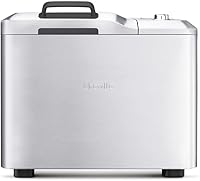
Zojirushi Bread Machines Compared: Which Model Fits?
The Zojirushi bread machine lineup includes 2 lb Virtuoso Plus and Supreme models, plus 16 oz Maestro and Mini machines. Choose by loaf size, counter space, material preferences and the settings you will use.
On this page (10 sections)
- Which Zojirushi bread machine fits your baking routine?
- Is the Virtuoso Plus the right Zojirushi bread machine?
- What changes with the PFAS-Free Virtuoso Plus?
- Does the Supreme fit a smaller counter?
- Should you choose the Maestro or Mini for smaller loaves?
- How should you set up a Zojirushi bread machine?
- What mistakes can spoil a bread machine loaf?
- How do you care for these machines?
- How do you choose between these Zojirushi models?
- Which Zojirushi bread machine should you pick?
The Zojirushi bread machine lineup ranges from compact 16 oz machines to 2 lb models with specialty courses and different kneading systems. Choose the Virtuoso Plus for rapid whole wheat courses and dual heaters, the Supreme for a narrower 2 lb footprint, or a Maestro or Mini for smaller loaves.
These five machines cover different routines, so start with the amount of bread you use in a week. Then check your counter space and choose only the settings that match the breads and doughs you plan to make.
If you are still comparing features across brands, start with our guide to what to look for in a bread machine.
Which Zojirushi bread machine fits your baking routine?
The right Zojirushi bread machine depends on batch size first, then footprint and settings. The table below gives you a quick way to narrow the choices before comparing each machine.
| Model | Capacity | A good fit if you want |
|---|---|---|
| Home Bakery Virtuoso Plus | 2 lb | Dual heaters, double kneading blades and specialty courses |
| Virtuoso Plus PFAS-Free | 2 lb | Food-contact areas described as free of PFAS and BPA, plus Homemade settings |
| Home Bakery Supreme | 2 lb | A narrower footprint with settings for cake, jam and dough |
| Home Bakery Maestro | 16 oz | An ingredient dispenser and customizable Homemade settings |
| Home Bakery Mini | 16 oz | A carrying handle, viewing window and quick-bake cycle |
The Supreme is 16.87 in wide and 8.5 in deep, while both Virtuoso Plus machines are 18 in wide and 10.5 in deep. The Maestro is 8.88 in wide and 12.5 in deep, and the Mini is 8.5 in wide and 11.25 in deep.
Capacity labels can make the smaller models seem alike, but the details matter. Compare the loaf sizes in our guide to bread machine loaf sizes before deciding how much bread your household can use.
Is the Virtuoso Plus the right Zojirushi bread machine?
The Home Bakery Virtuoso Plus suits buyers who want 2 lb loaves, dual heaters and double kneading blades. Its rapid courses can bake white or whole wheat bread in 2 hours and 25 minutes.
The course list includes multigrain, whole wheat, rapid whole wheat, gluten free, salt free, sugar free and vegan options. The large LCD and course key code on the lid make it easier to select a program without relying on a long list of button sequences.
This model makes sense if you bake full-size loaves often, prefer the features of its heating and kneading system, or want a quick course for white or whole wheat bread. Its broad footprint makes it a poor fit for a narrow counter, and the 2 lb capacity can be more bread than a small household needs.
Before choosing it, measure the counter width and depth where you plan to use it. Leave room to open the lid and handle the pan safely, and keep the machine near a suitable outlet.
What changes with the PFAS-Free Virtuoso Plus?
The PFAS-Free Virtuoso Plus suits buyers who prioritize Zojirushi's stated food-contact material description alongside a 2 lb capacity. Zojirushi describes the food-contact areas as free of PFAS, including PTFE and PFOA, and BPA.
Its menu includes European bread and sourdough starter, along with bread, cake, jam and dough options. Three Homemade memory settings let you customize knead, rise and bake times, which can help when you want to adjust a repeat recipe rather than choose a preset each time.
Choose this model when its food-contact description and custom-cycle flexibility are priorities. Skip it if you mainly want straightforward basic loaves and would not use the additional options, or if its 18 in width and 10.5 in depth do not fit your counter.
The range of settings can be useful, but it also asks you to spend time learning the controls and recipe process. Start with a basic recipe from the included instructions, then change one setting at a time so you can identify what improved the result.
Does the Supreme fit a smaller counter?
The Home Bakery Supreme is a 2 lb machine with a narrower footprint than either Virtuoso Plus. Its 8.5 in depth can be easier to accommodate on a shallow counter.
Its settings cover bread, cake, meatloaf, jam, dough and sourdough starter, and you can adjust the crust shade of its rectangular loaf. That mix suits a baker who wants a large loaf and uses the machine for more than a basic bread cycle.
Pick the Supreme if you need 2 lb capacity but the Virtuoso Plus is too deep for your available space. Skip it if the dual heaters, double blades, rapid whole wheat course or stated food-contact materials of another model are more important to you.
A 2 lb loaf is not automatically the best value for a household that eats bread slowly. If you regularly freeze part of a loaf or bake for several people, the extra capacity may suit you; otherwise, a 16 oz machine can reduce leftovers.
Should you choose the Maestro or Mini for smaller loaves?
The Maestro and Mini both make 16 oz loaves, but they suit different habits. Choose the Maestro for its automatic ingredient dispenser and custom cycles, or the Mini for its carrying handle, viewing window and quick-bake cycle.
The Maestro includes courses for multigrain, whole wheat, gluten free, salt free, sugar free and vegan baking. Its other settings cover bread and pizza dough, pasta dough, cake and jam, so it is a good match for someone who wants a compact machine with varied uses.
The removable dispenser adds convenience when you make recipes with nuts or other ingredients that should be added after the initial mixing. Skip the Maestro if you usually bake plain loaves and would rather have a simpler machine with a handle and viewing window.
The Mini has a 13-hour delay timer and settings for cookie or pasta dough, fresh fruit jam and cake. It is a practical choice for a small kitchen or a household that wants modest loaves and values the option to move or store the machine.
Choose the Mini if its smaller footprint, handle and quick-bake option line up with your routine. Skip it if you want the Maestro's automatic ingredient dispenser, gluten free and vegan courses, or customizable Homemade settings.
For more detail about the Mini's role in the lineup, read our Zojirushi Home Bakery Mini review.
How should you set up a Zojirushi bread machine?
A good first setup starts with a stable, level counter and a recipe that matches the machine's capacity. Read the manual before adding ingredients, because cycle order and ingredient amounts vary by recipe.
Set the machine on a firm, heat-safe surface with clearance around it. Check that the pan and kneading blade are seated correctly, and keep the cord away from hot surfaces or places where it can catch on a handle.
Measure ingredients carefully, especially flour and liquid. Use the measuring tools and recipe proportions intended for the machine, and add ingredients in the order the recipe specifies.
Select the loaf size and cycle that fit the recipe, then choose a crust shade if that model offers the option. The display and lid key guide can help you locate the right course; avoid changing multiple settings on your first attempt.
For an overnight bake, make sure the recipe works with a delay timer and that perishable ingredients will remain safe at room temperature for the full delay. A timer is convenient, but it does not replace checking the recipe's ingredient guidance.
If this is your first machine, our first-loaf walkthrough explains the basic sequence from measuring to removing the finished loaf. For cycle choices, see bread machine settings explained.
What mistakes can spoil a bread machine loaf?
Most early bread machine problems come from measurement errors, unsuitable recipes or choosing the wrong cycle. A consistent routine makes it easier to tell whether a recipe or setting needs adjustment.
- Measuring flour by eye: Too much flour can leave a dry, dense loaf. Measure consistently and avoid packing flour into a cup.
- Changing the ingredient order: Ingredients that meet too early can affect how yeast activates, especially with a delayed start. Follow the recipe's order.
- Using a recipe for the wrong capacity: A recipe designed for a smaller loaf may not fill a 2 lb machine well, while a large recipe can overwhelm a compact model.
- Choosing a rapid cycle for every recipe: Rapid programs save time, but they are designed for specific breads and ingredients. Use the standard course when a recipe calls for a longer rise.
- Adding too much extra flour during kneading: A dough that looks sticky early may become smoother as kneading continues. Add flour only in small amounts if the recipe's guidance calls for it.
- Forgetting the paddle: Confirm the kneading blade is in place before adding ingredients. If it is missing, the machine cannot knead the dough as intended.
- Leaving the loaf in the pan too long: Follow the recipe's cooling instructions and remove the loaf carefully. Trapped steam can soften the crust.
If the center sinks or the loaf collapses, ingredient balance and rising conditions are common places to check. Our guide to why bread machine loaves collapse walks through the likely causes.
How do you care for these machines?
Care starts with letting the pan and machine cool before cleaning. Follow the model's care instructions and keep water away from the body and electrical parts.
The Virtuoso Plus and Supreme care details specify hand washing. For the Maestro, the product details say dishwasher safe, but check the manual for which removable parts that applies to before placing anything in a dishwasher.
Remove crumbs from the pan and around the kneading blade after each bake. If dough is stuck, allow it to soften with water in the pan, then wash gently; avoid scraping the nonstick surface with metal tools.
Dry the pan and blade fully before storing them. Check the blade area for baked-on residue, since leftover dough can make the blade harder to remove or interfere with the next bake.
Use a damp cloth on the exterior and display rather than immersing the machine. Keep ventilation openings clear, and store the cord so it does not pull the machine off the counter.
Our guide to cleaning a bread machine pan and paddle covers a simple cleanup routine.
How do you choose between these Zojirushi models?
Start with loaf size, counter measurements and the settings you will actually use. This gives you a clear decision without paying attention to features that do not fit your routine.
- Choose a 2 lb model if you want larger loaves or bake for several people. Pick the 16 oz Maestro or Mini if smaller batches are enough.
- Measure the counter width and depth, then compare the machine dimensions. Leave room for the lid and safe handling of a hot pan.
- Name the settings you expect to use, such as gluten free, pizza dough, jam, sourdough starter or a delayed start.
- Consider how much control you want. Custom cycle memories and many course options reward a baker who will use them; a simpler routine may suit a smaller model.
- If food-contact materials are a priority, compare Zojirushi's description of the PFAS-Free Virtuoso Plus with the features of the other machines.
The choice is also about shape and routine, not only capacity. For a wider comparison of machine styles, read horizontal vs. vertical bread machines.
Which Zojirushi bread machine should you pick?
Pick the Home Bakery Virtuoso Plus for 2 lb loaves, dual heaters and rapid whole wheat courses. Choose the PFAS-Free Virtuoso Plus for its stated food-contact materials and custom cycle memories, the Supreme for a narrower 2 lb footprint, or the Maestro and Mini for 16 oz loaves.
If you want a dispenser and specialty courses in a smaller machine, the Maestro is the better fit. If you want a compact machine with a handle and quick-bake option, choose the Mini.
For a broader shortlist across brands, compare our best bread machines for home bakers and bread maker reviews.
Frequently asked questions
Which Zojirushi bread machine is best for most people?
The Zojirushi Home Bakery Virtuoso Plus suits households that want a 2 lb loaf, dual heaters and courses such as whole wheat, gluten free and vegan. Choose a 16 oz model for smaller batches, or the Supreme for a narrower 2 lb machine with cake, jam and dough settings.
What is the difference between the Virtuoso Plus and PFAS-Free model?
Both are 2 lb Virtuoso Plus bread machines with a 13-hour delay timer and an easy-to-read LCD. Zojirushi describes the PFAS-Free model's food-contact areas as free of PFAS, including PTFE and PFOA, and BPA; it also has sourdough starter and three customizable Homemade memory settings.
Which Zojirushi bread machine makes the smallest loaves?
The Home Bakery Maestro and Home Bakery Mini both have a 16 oz capacity. The Maestro has an automatic ingredient dispenser and three Homemade memory settings, while the Mini has a carrying handle, viewing window, quick-bake cycle and settings for cookie or pasta dough, jam and cake.
Can a Zojirushi bread machine make dough and jam?
Several Zojirushi models have dough and jam settings. The Supreme has sourdough starter, cake, jam and dough settings; the Maestro includes bread and pizza dough plus pasta dough; and the Mini has cookie or pasta dough, fresh fruit jam and cake settings.
How should I choose between a 1 lb and 2 lb bread machine?
Choose a 16 oz model if smaller batches suit your household and you want less bread at once. A 2 lb machine gives you room for larger loaves, but check its dimensions and consider whether you can use the bread before it goes stale.
Our bread machine loaf size guide explains the tradeoffs.